On this page
The short version
- The formula: a protein, a grain, a fruit and a vegetable — the same parts USDA requires in child-care lunches.
- Toddler amounts are small — about 1 oz of protein and ⅛ cup each of fruit and vegetable at ages 1–2.
- Pack at least two cold sources and an insulated bag; perishable food shouldn't sit out more than 2 hours.
- Cut round foods lengthwise, cook hard vegetables soft, and spread nut or seed butters thinly.
The lunchbox formula
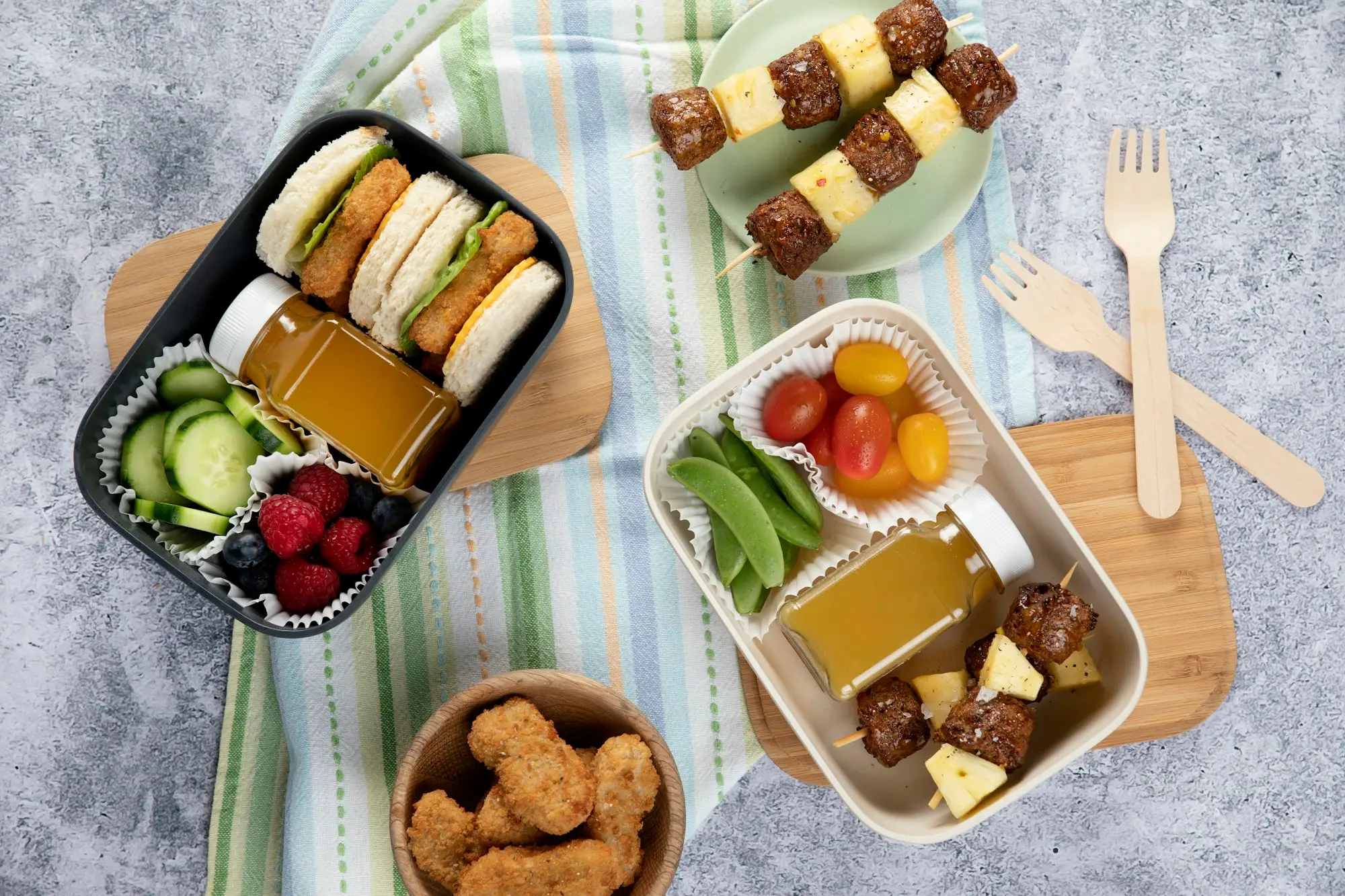
A no-reheat daycare lunch needs four parts: a protein, a grain, a fruit and a vegetable. That’s the same structure USDA requires for lunches in child care centers that take part in its Child and Adult Care Food Program — plus milk, which many centers serve themselves.1 If your box has all four, it’s a complete meal, hot or cold.
The amounts are smaller than most parents pack. These are the program’s minimum portions per lunch:
| Part | Ages 1–2 | Ages 3–5 |
|---|---|---|
| Protein (meat, fish, cheese, egg, beans, tofu, yogurt) | 1 oz equivalent | 1½ oz equivalents |
| Grain | ½ oz equivalent | ½ oz equivalent |
| Vegetable | ⅛ cup (2 tbsp) | ¼ cup |
| Fruit | ⅛ cup (2 tbsp) | ¼ cup |
| Milk (often served by the center) | 4 fl oz; unflavored whole milk at age 1 | 6 fl oz; unflavored, 1% or nonfat |
These are minimums, not limits. Pack a little more if your toddler is often hungry at pickup — and less if most of it comes home. For a closer look at amounts, see the toddler portion sizes guide. For hot dinners built the same way, try the best meals for 3-year-olds.
12 cold lunch combinations
Each of these is safe to eat cold and is cut for under-4s. Swap freely across rows — any protein works with any grain.
| Protein | Grain | Fruit | Vegetable |
|---|---|---|---|
| Diced mozzarella | Whole-wheat pasta salad | Quartered grapes | Peas, cooked and lightly mashed |
| Hummus | Soft pita strips | Diced ripe pear | Steamed carrot sticks |
| Turkey + cheese, rolled | Tortilla pinwheels | Diced melon | Soft-roasted red pepper strips |
| Diced cold chicken | Rice | Halved blueberries | Roasted sweet potato cubes |
| Bean + cheese quesadilla wedges | (the tortilla) | Orange segments, cut into pieces | Steamed green beans, cut small |
| Sunflower seed butter, spread thin | Whole-wheat bread strips | Banana, sliced lengthwise | Cooked peas, lightly mashed |
| Cottage cheese | Seed-free whole-grain crackers | Diced canned peaches, rinsed | Cooked diced beets |
| Chopped hard-boiled egg | Toast fingers | Quartered strawberries | Steamed broccoli florets |
| Baked tofu cubes | Soft noodles | Mandarin pieces | Shelled edamame, mashed |
| Mashed black beans | Mini tortilla | Diced mango | Avocado, diced |
| Salmon cake, cold | Couscous | Diced kiwi | Zucchini, cooked soft |
| Plain yogurt | Soft oat muffin | Halved raspberries | Roasted cauliflower |
A few why-it-works notes: in the USDA child-care pattern, cheese, eggs, beans, tofu, yogurt and nut butters can all fill the protein slot, not just meat.1 Hard cheese, bread, crackers and peanut butter are among the foods USDA says don’t need a cold source — but once you add cut fruit, yogurt or meat, the whole box needs one.2
Keeping a cold lunch safe until noon
Bacteria multiply fastest between 40°F and 140°F — USDA’s “Danger Zone” — so a perishable lunch that rides to daycare without ice won’t stay safe for long.2
USDA's rules for packed lunches
- Use two cold sources. Two frozen gel packs (at least 5 × 3 inches each), or one pack plus a frozen water bottle. Put one under and one on top of the food.2
- Pick an insulated, soft-sided bag. USDA says these keep food coldest.2
- Mind the 2-hour rule. Perishable food shouldn’t sit at room temperature more than 2 hours — 1 hour above 90°F.2
- Prep the night before, pack in the morning. Chill cooked food (chicken, pasta salad) in the fridge at 40°F or below overnight, then pack right before you leave.2
- Ask about the fridge. If the center has one, ask staff to put the bag in it — with the lid open so cold air reaches the food.2
- Throw away leftovers. Discard anything that comes home uneaten rather than reusing it the next day.2
A frozen sandwich doubles as an extra ice pack and thaws by lunchtime. USDA notes this works best without mayonnaise, lettuce or tomato — add those separately.2
Choking-safe cuts for the lunchbox
The AAP recommends keeping high-risk foods away from children — or changing how they’re served — until at least age 4.3 In a lunchbox, the common culprits are whole grapes, cherry tomatoes, chunks of cheese or meat, raw carrot sticks, nuts, popcorn and thick nut butter.34
- Grapes, cherry tomatoes, blueberries: cut lengthwise or into quarters.56
- Hot dogs and sausages: quarter lengthwise, then slice small.6
- Cheese: shred or dice rather than sending string cheese or chunks.3
- Hard vegetables: steam or roast until soft; skip raw carrot and celery sticks.56
- Everything else: pieces no bigger than ½ inch.3
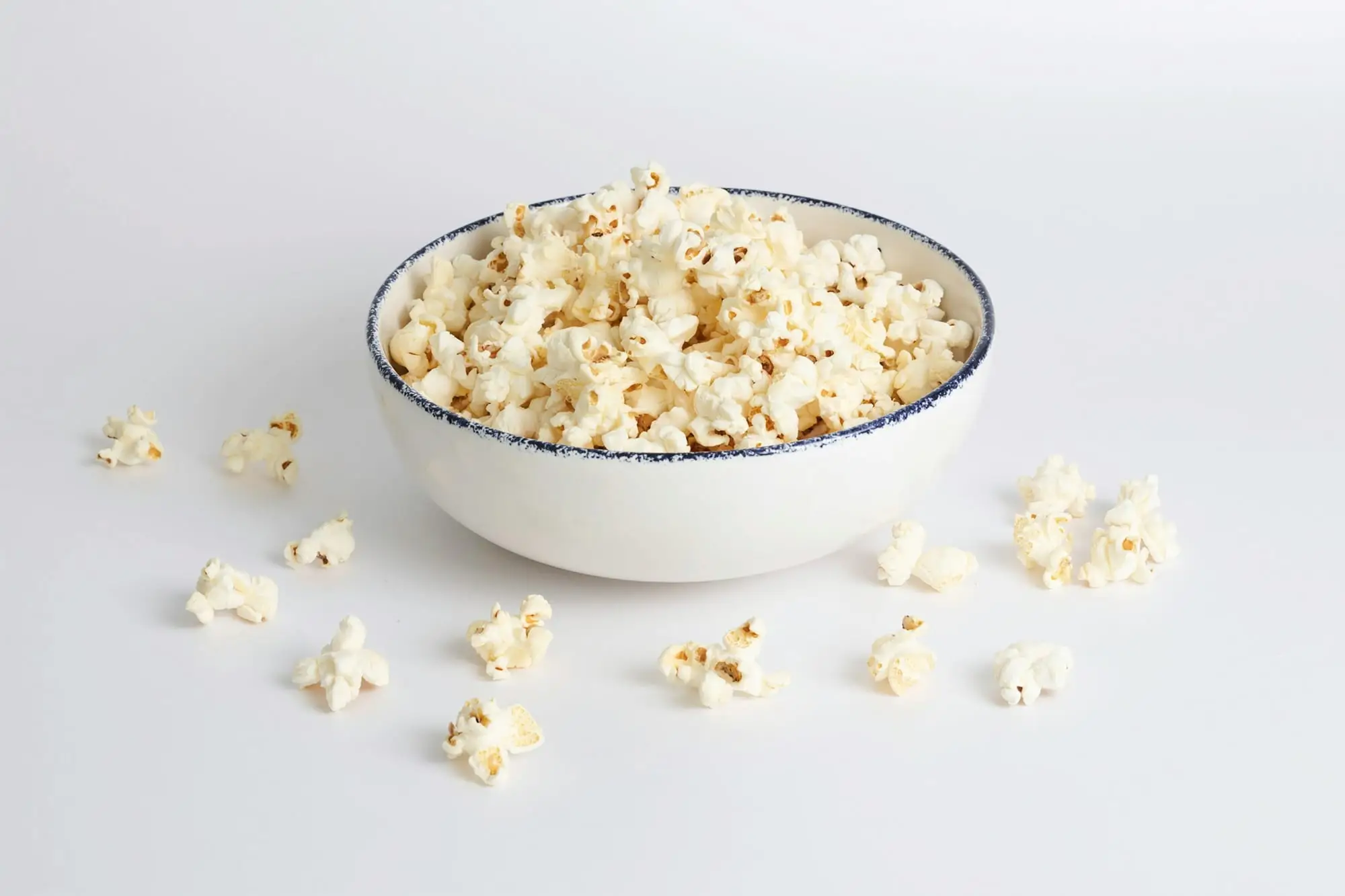
- Skip entirely under 4: popcorn, whole nuts and seeds, chips, granola bars and hard or gummy candy.4
Nut-free classrooms
Some daycares and preschools don’t allow peanuts or tree nuts at all, so check your center’s policy before packing nut butter. Sunflower seed butter is the usual swap — but the same choking rule applies: spread it thinly, never in thick globs.5 Check the ingredient list on packaged breads and crackers for nuts, too.
Packing for a picky eater
A lunchbox is a low-pressure place to offer new food: no one’s watching, and nothing has to be finished. Always include one food your child reliably eats next to the new one.8 Keep the new food small — a spoonful is plenty.
Then pack it again. It can take 8 to 10 exposures before a young child is willing to try a new food.7 If the whole box keeps coming home untouched, the problem may be the morning snack or the timing rather than the food — see how many snacks a toddler needs and our guide to toddlers who only eat carbs.
When to talk to your pediatrician
Call your child's doctor if your child
- Brings home most of their lunch most days and is losing weight or not gaining as expected
- Has vomiting or diarrhea after eating packed food, especially with a fever
- Has hives, swelling or trouble breathing after eating any food
- Gags or chokes often while eating, even on soft foods
- Shows signs of dehydration — fewer wet diapers, a dry mouth or no tears
Common questions
What can I pack for a toddler's lunch that doesn't need heating?
Pasta salad with diced mozzarella, hummus with soft pita, turkey and cheese pinwheels, cold diced chicken with rice, cottage cheese with crackers, or a thin sunflower-butter sandwich. Add a cut-up fruit and a soft-cooked vegetable to each.
How do I keep my toddler's lunch cold at daycare?
Use an insulated, soft-sided bag with at least two cold sources — two frozen gel packs, or one pack plus a frozen water bottle — placed above and below the food, as USDA advises. If the center has a fridge, ask them to store it there.
How long can a packed lunch sit out?
Perishable food shouldn't be at room temperature for more than 2 hours, or 1 hour above 90°F, according to USDA. That's why a lunch packed at 8 a.m. for noon needs ice packs.
What should I pack for a picky eater at daycare?
Small portions, with at least one food your child reliably eats alongside one or two less familiar ones. Pack the same new food more than once — it can take 8 to 10 tries before a young child accepts it.
Can I pack peanut butter for daycare?
Only if your center allows it — some are nut-free. Sunflower seed butter is a common swap. Either way, spread it thinly for under-4s; thick globs of nut or seed butter are a choking hazard.
Sources
- U.S. Department of Agriculture. 7 CFR 226.20(c)(2), Child and Adult Care Food Program lunch and supper pattern. Requirements for meals.
- U.S. Department of Agriculture, Food Safety and Inspection Service. Keeping "Bag" Lunches Safe.
- American Academy of Pediatrics, HealthyChildren.org. Choking Prevention for Babies & Children: What Every Parent Needs to Know.
- Centers for Disease Control and Prevention. Choking Hazards.
- American Academy of Pediatrics, HealthyChildren.org. Building Balanced Snacks to Feed to Toddlers.
- American Academy of Pediatrics, HealthyChildren.org. Feeding & Nutrition Tips: Your 2-Year-Old.
- U.S. Department of Agriculture and U.S. Department of Health and Human Services. Dietary Guidelines for Americans, 2025–2030.
- American Academy of Pediatrics, HealthyChildren.org. 10 Tips for Parents of Picky Eaters.
This article is for general information and isn't a substitute for advice from your child's doctor. Our editorial standards.