On this page
The short version
- Most toddlers need 3 meals and 2 snacks a day; some 1-year-olds need a third, and many 2- to 5-year-olds need only 1 or 2.
- Space meals and snacks about 2–3 hours apart, at roughly the same times each day.
- Build snacks from at least two food groups — a protein or dairy food plus a fruit, vegetable or grain.
- Constant grazing is the most common reason a toddler "won't eat" meals. Set snack times and close the kitchen in between.
The short answer, by age
Most toddlers do best on 3 meals and 2 snacks a day. The American Academy of Pediatrics describes that pattern for 1-year-olds, and 3 meals plus 1 or 2 snacks from age 2 on.12 In practice, that’s breakfast, a mid-morning snack, lunch, an afternoon snack and dinner.
| Age | Meals | Snacks | Who says |
|---|---|---|---|
| 12–24 months | 3 | 2 (up to 3) | AAP: 2 snacks; CDC: 2–3 |
| 2–3 years | 3 | 1–2 | AAP |
| 4–5 years | 3 | 1–2 | AAP |
The sources differ slightly for the youngest toddlers. The CDC says children up to 24 months may have “about 3 meals and 2 to 3 snacks every day.”3 We follow the AAP’s 2 as the starting point, and treat a third snack as fine when the day is long — an early dinner and a late bedtime, say.
As toddlers get older, meals get bigger and snacks matter a little less. By the preschool years, the AAP says 1 to 2 snacks a day is normal.4 Many children keep the afternoon snack and drop the morning one.
How far apart should snacks be?
Aim for about 2 to 3 hours between any two eating times, meal or snack. That’s the spacing registered dietitians at the Academy of Nutrition and Dietetics recommend for toddlers: long enough to get hungry, short enough that a small stomach doesn’t run empty.5
The AAP puts it simply: toddlers have small stomachs and may not eat enough at one meal to last until the next. Many need an afternoon snack; some also need a morning one.6
| Time | What | Example |
|---|---|---|
| 7:00 | Breakfast | Oatmeal cooked in milk, mashed berries |
| 9:30 | Morning snack | Plain yogurt + diced pear |
| 12:00 | Lunch | Bean and cheese quesadilla, soft-cooked carrots, milk |
| 3:00 | Afternoon snack (after nap) | Cottage cheese + peaches + ½ English muffin |
| 5:30 | Dinner | Family meal, with one food your toddler usually eats |
| 7:00 | Optional bedtime snack | Only if dinner was early or small: ½ banana, small cup of milk |
If your child naps at a different time, slide everything along. What matters is that the times are roughly the same every day, so your toddler learns food will come — and doesn’t need to ask for it every 20 minutes.3
The snack formula: pair two food groups
A snack works best as a mini-meal, not a treat. The AAP’s recipe is a protein food (including dairy) plus a fruit or vegetable and/or a grain.6 The USDA’s rules for child care snacks are built the same way: centers in the federal Child and Adult Care Food Program must serve two of five components — milk, a protein food, a vegetable, a fruit or a grain — and milk and juice can’t be the only two.7
Two-group snacks that hold them until the next meal
- Plain yogurt + diced fruit. Dairy plus fruit; add a small piece of toast for a third group.6
- Cottage cheese + canned peaches (rinsed) + English muffin. Protein, fruit and grain in one bowl.6
- Cheese quesadilla + quartered cherry tomatoes. Warm, easy to hold, and it’s two food groups.6
- Oatmeal + a thin swirl of peanut butter + shredded apple. Grain, protein and fruit.6
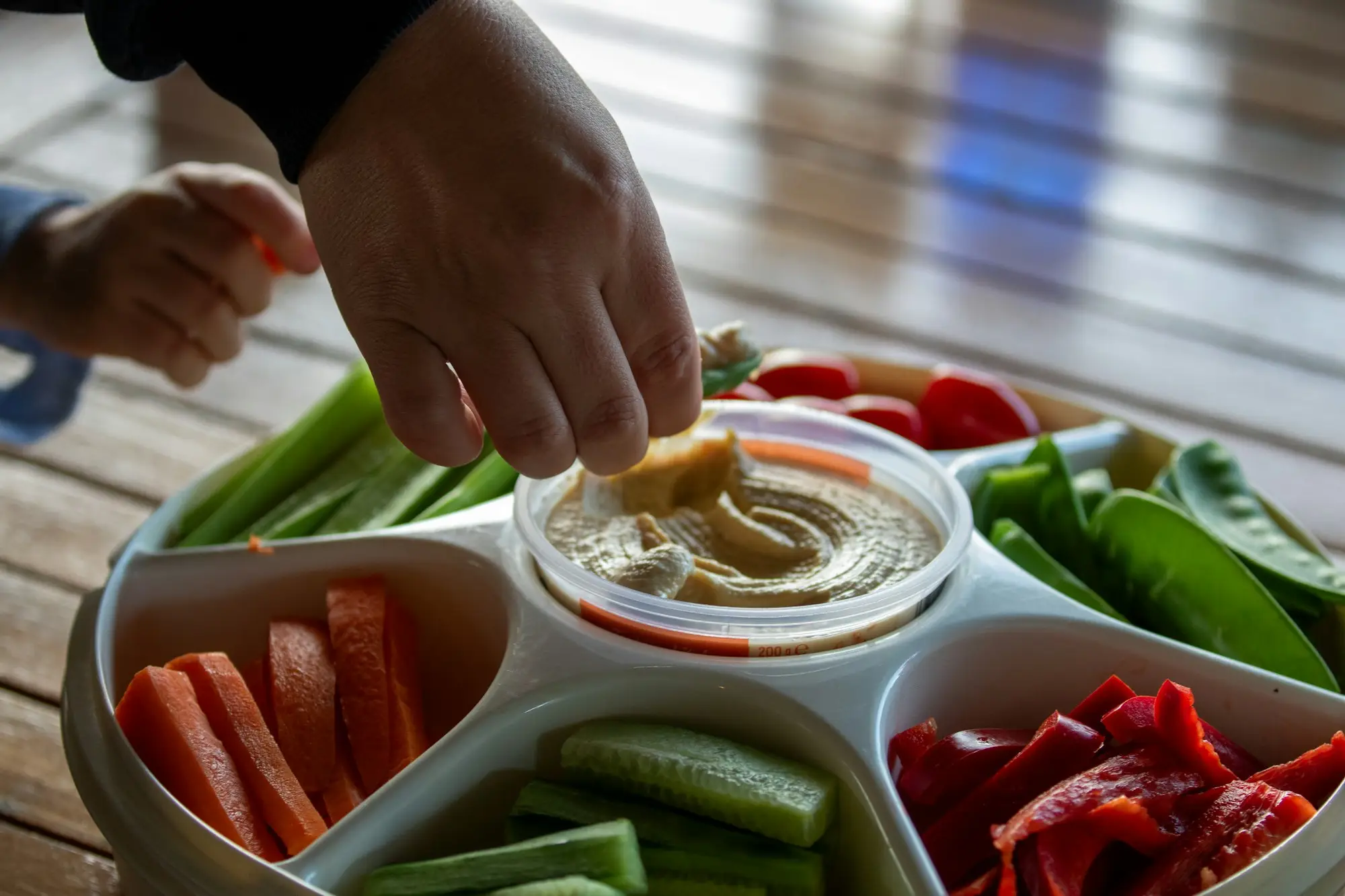
- Hummus + soft pita + steamed carrot sticks. Steam the carrots until soft; raw carrot sticks are a choking hazard under 4.8
Start small. The AAP’s example of a toddler snack portion is about three quartered strawberries and an eighth of a quesadilla — if they want more, they’ll ask.6
“My toddler only wants snacks”
This is one of the most common feeding complaints, and it almost always comes down to timing. When toddlers graze — a cracker here, a pouch in the stroller, milk whenever they ask — they never get properly hungry, so they arrive at meals uninterested. Dietitians warn that constant snacking dulls mealtime appetite and can lead to eating out of boredom rather than hunger.5
- Set the times and close the kitchen. Offer meals and snacks at fixed times; in between, offer water.5 The AAP suggests milk at meals and water at snack time for preschoolers.4
- Make snacks look like food, not “snack food.” The AAP suggests serving salty crackers, chips and cookies less often; dietitians point out they’re low in nutrients like calcium, iron and fiber.65
- Watch the snack before dinner. Dietitians note that snacks close to mealtime make children less receptive to new foods at the meal.5 If dinner is often refused, see our guide to toddlers who won’t eat dinner.
- Count drinks. A big cup of milk or juice works like a snack. Read how much milk a toddler should drink if your toddler drinks more than they eat.
- Sit down for snacks. The AAP advises that children sit down to eat, and the CDC suggests avoiding eating in the car or stroller — both to lower choking risk.89
Need something to serve? Here are 25 snack ideas for 2-year-olds with safe cuts.
Expect a week or two of protest when you tighten the schedule. That’s normal. Keep offering, keep calm, and let your child decide how much to eat at each sitting.3
Snacks and choking
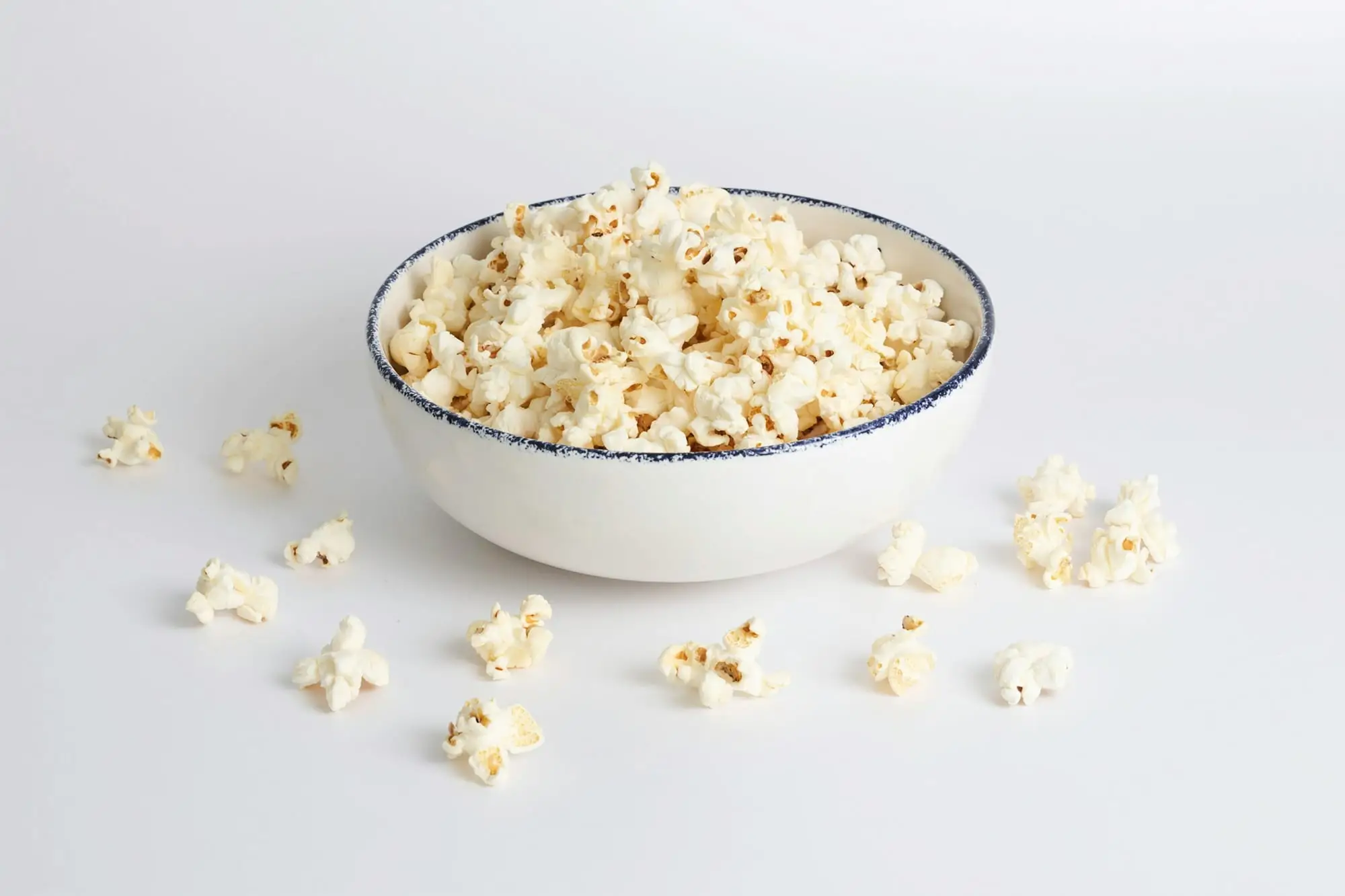
Many classic toddler snacks are on the AAP’s list of foods to keep away — or modify — until age 4: popcorn, whole nuts, whole grapes, chunks of cheese, raw carrots and thick dollops of nut butter.8 Cut round foods lengthwise or into small pieces, steam hard vegetables until soft, and spread nut butters thinly.6 For a full list of swaps, see the Everyday food hub, or read more on when kids can eat popcorn.
When to talk to your pediatrician
Call your child's doctor if your child
- Is losing weight, or isn't gaining weight as expected
- Seems hungry all the time, even after full meals and snacks
- Refuses most meals for more than a few days, or seems unwell
- Eats only a handful of foods, and the list is getting shorter
- Often gags, chokes or vomits while eating
Common questions
How many snacks should a 1-year-old have?
Usually 2 a day alongside 3 meals, according to the American Academy of Pediatrics. The CDC says children up to 24 months may have 2 to 3 snacks, so a third small snack is fine if there's a long gap before dinner or bedtime.
How many snacks should a 2- or 3-year-old have?
The AAP describes 3 meals plus 1 or 2 snacks a day from age 2 through the preschool years. Many toddlers keep an afternoon snack and drop the morning one as meals get bigger.
How far apart should toddler snacks be?
About 2 to 3 hours between meals and snacks, according to registered dietitians at the Academy of Nutrition and Dietetics. Snacks too close to a meal make children less likely to eat — or try — what's served.
My toddler only wants snacks. What should I do?
Set fixed times for meals and snacks, offer only water in between, and serve snacks that look like small meals rather than packaged snack foods. Most toddlers come to meals hungrier within a week or two.
What is a healthy snack for a toddler?
A protein or dairy food plus a fruit, vegetable or grain — for example plain yogurt with diced fruit, cottage cheese with peaches and toast, or a cheese quesadilla with quartered cherry tomatoes.
Sources
- American Academy of Pediatrics, HealthyChildren.org. Feeding & Nutrition Tips: Your 1-Year-Old.
- American Academy of Pediatrics, HealthyChildren.org. Feeding & Nutrition Tips: Your 2-Year-Old.
- Centers for Disease Control and Prevention. Tips for Mealtime Routines.
- American Academy of Pediatrics, HealthyChildren.org. Preschool Food & Feeding.
- Academy of Nutrition and Dietetics, EatRight.org. Reviewed May 2024. 4 Toddler Snacking Mistakes.
- American Academy of Pediatrics, HealthyChildren.org. Building Balanced Snacks to Feed to Toddlers.
- U.S. Department of Agriculture. 7 CFR 226.20(c)(3), Child and Adult Care Food Program snack pattern. Requirements for meals.
- American Academy of Pediatrics, HealthyChildren.org. Choking Prevention for Babies & Children: What Every Parent Needs to Know.
- Centers for Disease Control and Prevention. Choking Hazards.
This article is for general information and isn't a substitute for advice from your child's doctor. Our editorial standards.