On this page
The short version
- A toddler portion is about a quarter of an adult portion, according to the AAP.
- Ages 1 to 3: about 1 oz of meat, ¼ cup of cooked vegetables, ½ slice of bread, ½ cup of milk.
- The "1 tablespoon per year of age" rule is the AAP's measure for cooked vegetables, not a rule for every food.
- Serve less than you think, and let your child ask for more.
The short answer
A toddler’s portion is about a quarter of an adult’s, according to the American Academy of Pediatrics.1 For a child aged 1 to 3, that’s roughly 1 ounce of meat or fish, ¼ cup of cooked vegetables, half a slice of bread and ½ cup of milk at a sitting.2
That surprises a lot of parents. One ounce of chicken is about two 1-inch cubes, and a toddler serving of cheese is a single 1-inch cube.1 If your toddler eats a few bites of everything and declares themselves done, they may well have eaten a full portion.
Toddler portion size chart
The AAP’s chart below gives one portion per food group for ages 1 to 3 and 4 to 6, and how many portions to offer across the day.2
| Food group | Portions per day | Ages 1–3 | Ages 4–6 |
|---|---|---|---|
| Fruit | 2–3 | ½ piece fresh, or ¼ cup cooked, frozen or canned | ½ piece fresh, or ¼ cup cooked, frozen or canned |
| Vegetables | 2–3 | ¼ cup cooked | ¼ cup cooked, or ½ cup salad |
| Grains | 6–11 | ½ slice bread; ¼ cup cooked rice, pasta or cereal; ⅓ cup dry cereal; 2–3 crackers | ½ slice bread; ⅓ cup cooked rice, pasta or cereal; ½ cup dry cereal; 3–4 crackers |
| Protein | 2 | 1 oz meat, fish, chicken or tofu; ¼ cup cooked beans; ½ egg | 1 oz meat, fish, chicken or tofu; ⅓ cup cooked beans; 1 egg |
| Dairy | 2–4 | ½ cup milk; ½ oz cheese; ⅓ cup yogurt | ½ cup milk; 1 oz cheese; ½ cup yogurt |
A few notes on reading it. Grain portions are small, which is why the daily count looks high; the AAP’s toddler chart puts ages 1 to 3 at the low end, about 6 a day.1 Six quarter-cup portions is still only about 1½ cups of cooked grains. That toddler chart also gives slightly different figures for a few foods — for example 2 tablespoons (⅛ cup) of cooked beans and ¼ cup of dry cereal — so treat any single number as approximate.1
2-year-old and 3-year-old portion sizes
Both fall in the ages 1–3 column. There’s no separate chart for each year, because the difference between a small 2-year-old and a big 3-year-old is often larger than the difference between ages.
What changes around age 4 is mostly protein and dairy: a whole egg instead of half, 1 ounce of cheese instead of half, ⅓ cup of cooked beans or grains instead of ¼.2 The AAP’s sample menu for a 4-year-old shows this in practice — a full sandwich at lunch and ½ cup of pasta, rice or potato at dinner.5
For a full day of food built from these portions, see what a 2-year-old should eat in a day, or a week of meals in these portions in the best meals for 3-year-olds. For older children, see what a 5-year-old should eat in a day.
What the “tablespoon per year” rule really means
You’ll often hear “one tablespoon per year of age” given as the rule for every food. The AAP is more specific. In its toddler serving-size chart, 1 tablespoon for each year of age is the portion for cooked vegetables.1 So a 2-year-old’s vegetable portion is about 2 tablespoons, and a 3-year-old’s about 3.
A different AAP page uses it more loosely, suggesting either a quarter to a third of an adult portion, or 1 measuring tablespoon of each food per year of age, as a starting point.3 Either way, it’s where you start, not a ceiling. The same page’s advice: give less than you think your child will eat, and let them ask for more.3
Start with a tablespoon or two. A small portion that gets finished is better than a big one that gets refused.
What should a toddler’s plate look like?
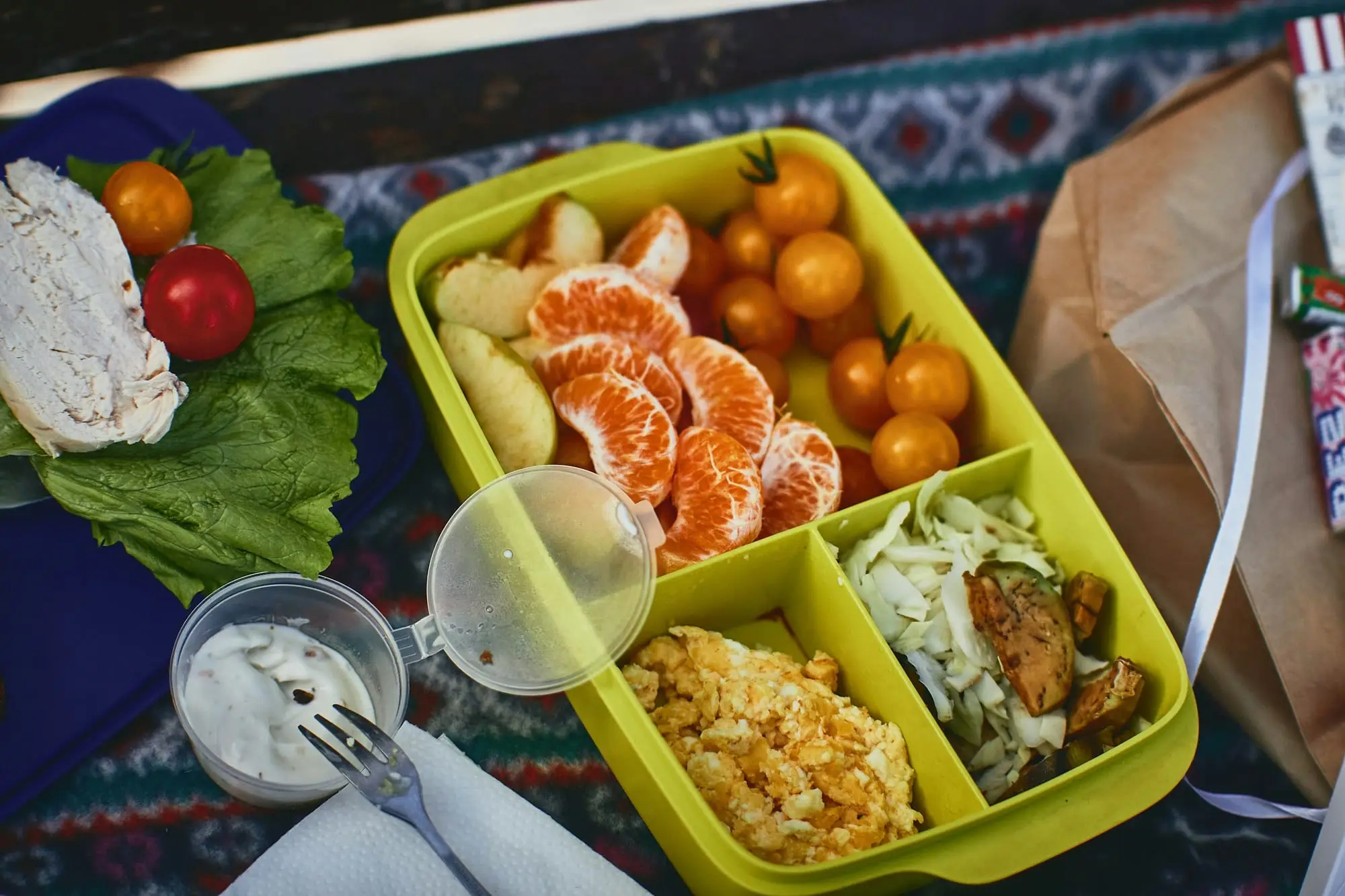
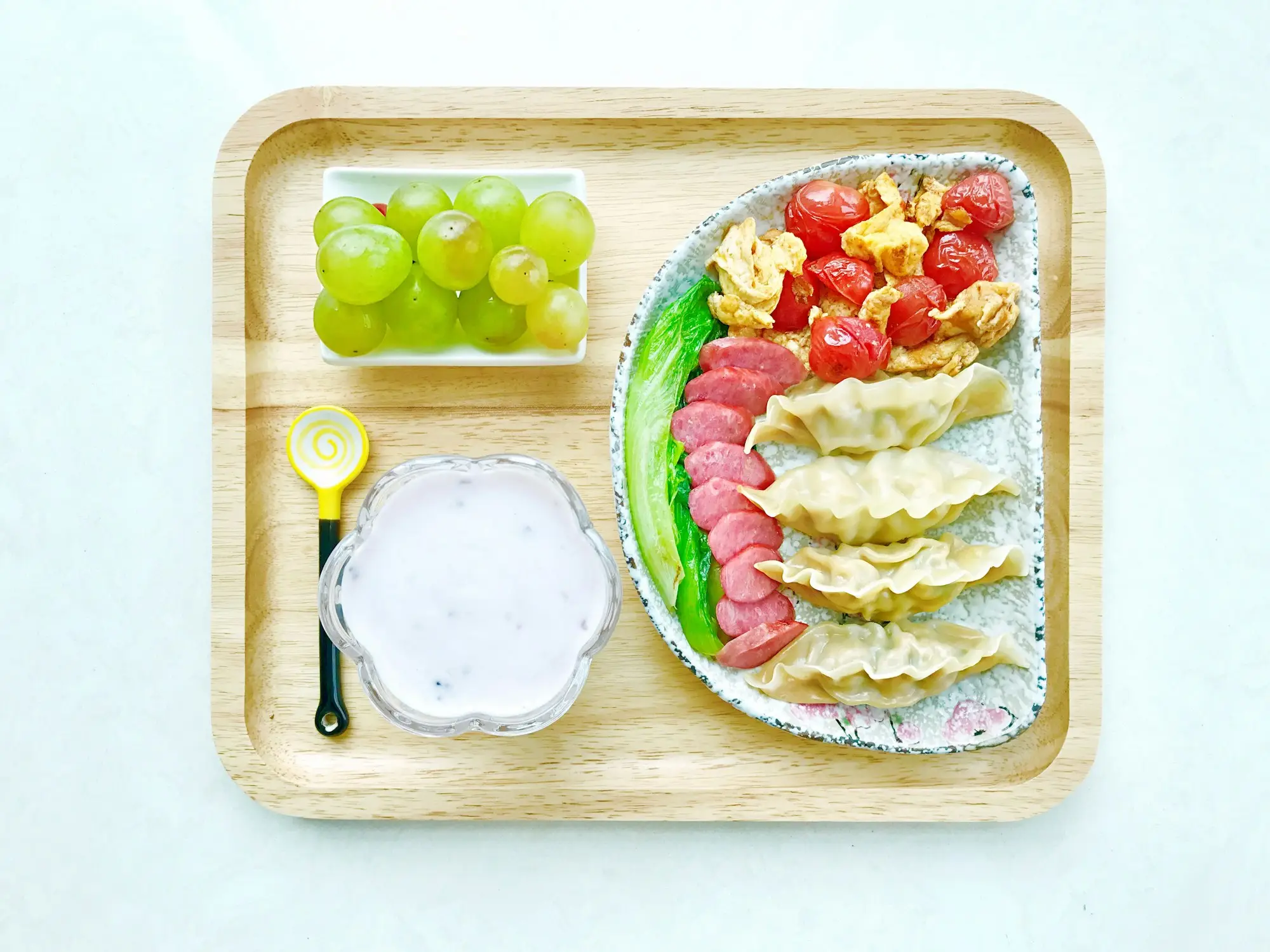
A simple guide from MyPlate, which the AAP passes on: make half the plate fruits and vegetables.3 The other half splits between a protein and a grain, with milk, yogurt or cheese on the side. The AAP also suggests offering every food group at every meal.3
Here’s an average toddler-sized meal, as the AAP describes it:1
Five ways to plate for a toddler
- Use a small plate. A toddler portion looks lost on an adult dinner plate, which makes it tempting to pile on more.
- Include one familiar food. A food they usually eat makes the rest of the plate less daunting.
- Keep pieces small and soft. Children don’t chew with a grinding motion until about age 4; cut grapes into quarters and avoid nuts and chunks of peanut butter.7
- Serve milk in a small cup. Each toddler dairy portion is ½ cup of milk.2 From 12 to 24 months, about 2 cups a day in total is enough.6
- Offer seconds of anything. If they want more pasta, that’s fine. Keep the next meal’s vegetables coming without comment.
Why portions vary so much day to day
Toddler appetite is famously uneven. Growth slows after the first birthday, and many toddlers eat much less than they did as babies.7 They may eat a big breakfast and very little else, or the same food for three days and then refuse it.7
That’s why the AAP’s portions are a guide to what to offer, not what your child must finish. It’s normal for intake to swing; the AAP advises looking at growth and what your child eats over a week rather than at one meal.4 A child who is growing well is getting enough.3 If dinner is the meal that falls apart, see what to do when a toddler won’t eat dinner.
When to talk to your pediatrician
Check in with your child's doctor if
- Your child isn't gaining weight, or is losing weight
- They regularly eat far more than these portions and are gaining weight quickly
- They refuse a whole food group for weeks at a time
- They often gag, choke or have trouble swallowing
Common questions
What is a normal portion size for a toddler?
About a quarter of an adult portion, according to the American Academy of Pediatrics. For ages 1 to 3 that's roughly 1 oz of meat or fish, ¼ cup of cooked vegetables or grains, ½ slice of bread, and ½ cup of milk.
What is a 2-year-old's portion size?
The same as the AAP's ages 1–3 portions — about 1 oz of meat, half an egg, ¼ cup of cooked vegetables, ½ slice of bread, ½ piece of fresh fruit and ½ cup of milk. Many 2-year-olds eat more or less than this at a given meal.
What is a 3-year-old's portion size?
Still the AAP's ages 1–3 portions. From about age 4, portions grow slightly — for example a whole egg instead of half, ⅓ cup of cooked grains, and 1 oz of cheese.
What should a toddler's plate look like?
Aim for about half the plate as fruit and vegetables, plus a small protein, a grain and some dairy across the meal. Include at least one food your toddler already likes.
Does the "1 tablespoon per year of age" rule apply to all foods?
In the AAP's toddler serving-size chart it applies to cooked vegetables. Another AAP page suggests it as a loose starting point for each food. Either way, it's a place to start, and your child can ask for more.
Sources
- American Academy of Pediatrics, HealthyChildren.org. Serving Sizes for Toddlers.
- American Academy of Pediatrics, HealthyChildren.org. Chart adapted from Dietz WH, Stern L, eds. Nutrition: What Every Parent Needs to Know. 2nd ed. AAP; 2012. Portions and Serving Sizes.
- American Academy of Pediatrics, HealthyChildren.org. Making Sure Your Child is Eating Enough.
- American Academy of Pediatrics, HealthyChildren.org. Sample Menu for a 2-Year-Old Child.
- American Academy of Pediatrics, HealthyChildren.org. Sample Menu for a Preschooler.
- American Academy of Pediatrics, HealthyChildren.org. Recommended Drinks for Children Age 5 & Younger.
- American Academy of Pediatrics, HealthyChildren.org. Feeding & Nutrition Tips: Your 1-Year-Old.
This article is for general information and isn't a substitute for advice from your child's doctor. Our editorial standards.