On this page
- The short answer
- Why is honey unsafe for babies?
- What if my baby already had some honey?
- Is corn syrup the same as honey?
- When can toddlers have honey?
- What about honey in baked goods, cereal or snacks?
- What can I use to sweeten food instead?
- What are the signs of infant botulism?
- More on starting solids
- Common questions
The short version
- Babies can have honey from 12 months. Before that it can cause infant botulism, a rare but serious illness.
- Don't add honey to food, water, formula or a pacifier.
- After the first birthday honey is safe from a botulism standpoint, but it's still added sugar.
- Call the doctor or go to the ER for constipation with poor feeding, a weak cry or floppiness.
The short answer
Babies can have honey once they turn 12 months old. The CDC says honey given to children younger than 12 months may cause a severe food poisoning called botulism, and advises: “Do not give your child honey before 12 months.”1 The AAP and the UK’s NHS give the same age.23
There’s no gray area before that date. The rule covers honey on its own and honey added to anything else: the CDC says not to add it to your baby’s food, water, infant formula or pacifier.1
Wait until the first birthday. After that, honey is safe from botulism, but it’s still a sweet food.
Why is honey unsafe for babies?
Honey can carry spores of the bacterium Clostridium botulinum. MedlinePlus lists honey and some corn syrups among the foods where the spores may be found.6 The AAP calls honey another source of botulism spores.2
In infant botulism, the spores are swallowed, settle in the baby’s large intestine and produce a toxin there.5 The AAP says it occurs mostly in babies younger than 6 months, so the 12-month rule gives a wide margin.2
What if my baby already had some honey?
Try not to panic. Infant botulism is rare, and one taste doesn’t mean your baby will get sick. But it’s worth acting on the information rather than guessing.
Call your pediatrician, tell them how much and when, and ask what to watch for. The AAP says symptoms can show up anywhere from 3 to 30 days after exposure to the spores, so the watching period is long.2 Constipation is often the first sign, followed by trouble feeding, a weak cry and floppiness (see the signs below).24
If any of those signs appear, don’t wait to see if they pass. Go to the ER.4
Is corn syrup the same as honey?
Not the same food, but MedlinePlus lists both honey and some corn syrups as foods where the spores may be found, and says these foods should not be fed to infants less than 1 year old.6 If you’re checking a label for a baby under 12 months, look for corn syrup as well as honey.
When can toddlers have honey?
From 12 months, honey is fine as far as botulism goes. The AAP says honey should be avoided in babies under 12 months, and the NHS says to wait until a child is over 1 year old.23
Honey is still sugar. The NHS advises avoiding food and drink with sweeteners or sugar for children aged 4 or younger, and says that includes the natural sugar in honey.3 So think of it as an occasional drizzle, not a daily habit. For the bigger picture, see how much sugar a toddler should have.
| Age | Honey? | Why |
|---|---|---|
| Under 12 months | No, in any form | Infant botulism risk |
| 12 months and older | Yes, occasionally | No botulism concern; still added sugar |
What about honey in baked goods, cereal or snacks?
The CDC, AAP and NHS pages we checked don’t say that baking or processing makes honey safe for babies. Their advice is simply not to give honey before 12 months.123 So the cautious rule is to skip anything with honey in it until the first birthday.
In practice:
- Read labels. Honey turns up in some cereals, crackers, granola bars, yogurts and sauces.
- Skip honey in your own cooking for the baby’s portion: oat bars, pancakes, marinades.
- Don’t dip a pacifier in honey or sweeten anything with it.1
- Tell grandparents and sitters. The rule is easy to miss if it’s not their habit.
What can I use to sweeten food instead?
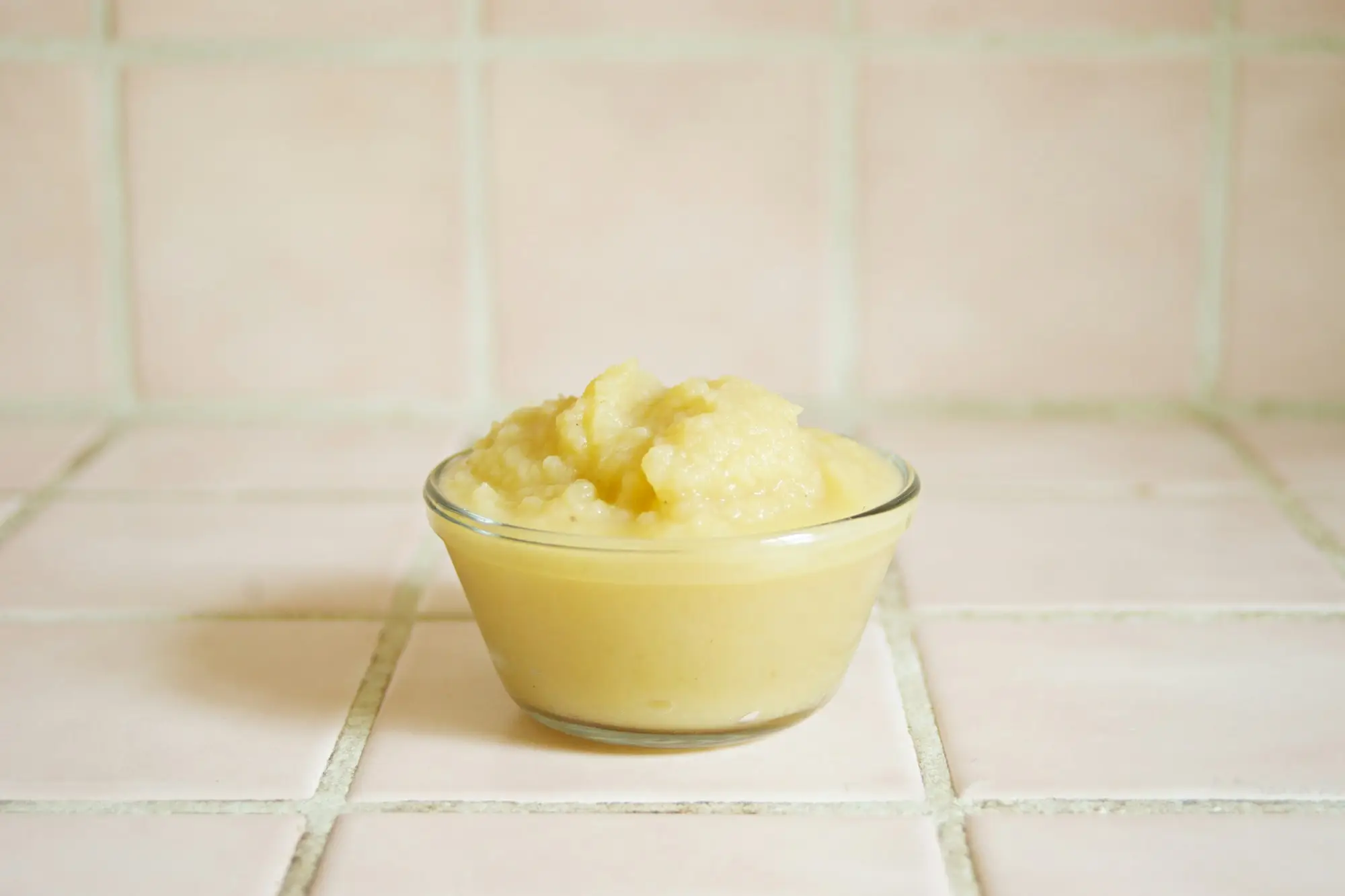
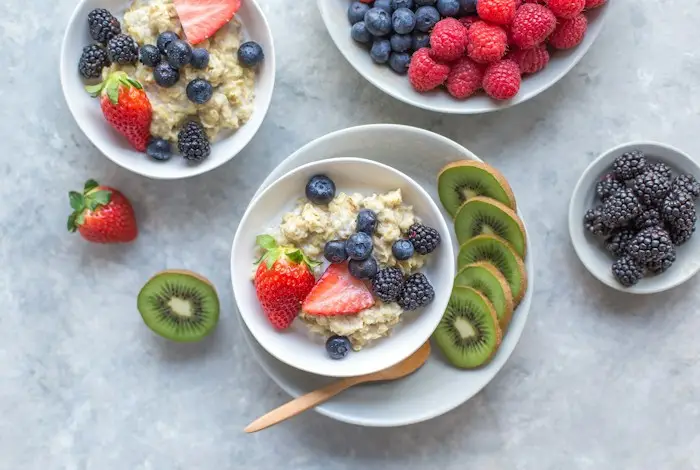
For babies, the simplest answer is nothing. Babies under 12 months don’t need sweetened food, and the NHS advises avoiding food and drink with added sugar or sweeteners for children aged 4 or younger.3 Naturally sweet whole foods such as mashed ripe banana or unsweetened applesauce add flavor to oatmeal or yogurt without any sweetener at all.
When you’re cooking for the whole family, set the baby’s portion aside before you add honey, then add it to everyone else’s plate. That’s easier than reading every label at the table.
What are the signs of infant botulism?
The CDC lists constipation, poor feeding, drooping eyelids, slowly reacting pupils, less facial expression and a weak cry that sounds different than usual.4 The AAP also lists poor head control and overall floppiness.2 Symptoms can appear anywhere from 3 to 30 days after exposure to spores.2
The CDC calls botulism a medical emergency: see your doctor or go to the emergency room right away, and do not wait.4 If your baby had honey and you’re worried, call your pediatrician.
Call your child's doctor or go to the ER if
- Your baby under 12 months has had honey and is constipated, feeding poorly or sucking weakly
- Their cry is weak or sounds different than usual
- They seem floppy, have poor head control or drooping eyelids
- They have less facial expression or are unusually weak
- They are having any trouble breathing — call 911
More on starting solids
Honey is one of a few foods to hold off on in the first year. For what to offer instead, see first foods for a 6-month-old, and for the milk side, how much milk a toddler should drink. If you’re mapping out the first year, how much solid food a baby should eat covers the pace.
Common questions
Can 1-year-olds have honey?
Yes. The AAP says honey should be avoided in babies under 12 months, and the NHS says to wait until a child is over 1 year old. From the first birthday the botulism risk no longer applies.
Can toddlers have honey?
Yes, after 12 months. It is still a sugar, and the NHS advises avoiding foods and drinks with sweeteners or sugar, including honey, for children aged 4 or younger, so keep it occasional.
Why can't babies have honey?
Honey can contain spores of the bacterium that causes botulism. In a baby's gut the spores can grow and produce a toxin, which is why the CDC says not to give honey before 12 months.
Is honey in baked goods or cereal OK for a baby?
We found no CDC, AAP or NHS guidance saying that baking or processing makes honey safe for babies, so the safe choice is to skip anything with honey in it until 12 months. Check labels on cereals, crackers and bars.
What are the symptoms of infant botulism?
The CDC lists constipation, poor feeding, drooping eyelids, a weak cry that sounds different than usual and less facial expression. It's a medical emergency, so see a doctor or go to the ER right away.
What if my baby accidentally ate honey?
Call your pediatrician for advice. Watch for constipation, poor feeding, a weak cry or floppiness over the following weeks, because symptoms can take 3 to 30 days to appear.
Sources
- Centers for Disease Control and Prevention. Foods and Drinks to Avoid or Limit (Infant and Toddler Nutrition).
- American Academy of Pediatrics, HealthyChildren.org. Botulism: Causes, Signs, Symptoms and Treatment.
- NHS (UK National Health Service). Foods to avoid giving babies and young children.
- Centers for Disease Control and Prevention. Symptoms of Botulism.
- Centers for Disease Control and Prevention. Clinical Overview of Infant Botulism.
- National Library of Medicine, MedlinePlus. Infant botulism.
This article is for general information and isn't a substitute for advice from your child's doctor. Our editorial standards.