On this page
The short version
- There's no clear winner. Purées, baby-led weaning (BLW) and a mix of both can all work.
- In a 206-baby trial, babies following a safety-focused version of BLW didn't choke more often than spoon-fed babies.
- The bigger risk with BLW is low iron — offer an iron-rich food at every meal.
- Finger foods should be soft enough to mash with gums and shaped like a finger, never round coins.
The short answer
Neither approach has been shown to be clearly better. The NHS says there’s no right or wrong way, and that what matters most is a wide variety of food and enough nutrients.7 The American Academy of Pediatrics notes there are very few studies on the health benefits of baby-led weaning, and says you can flex the idea to suit your family — spoon-feeding some foods doesn’t stop a baby learning to feed themselves.1
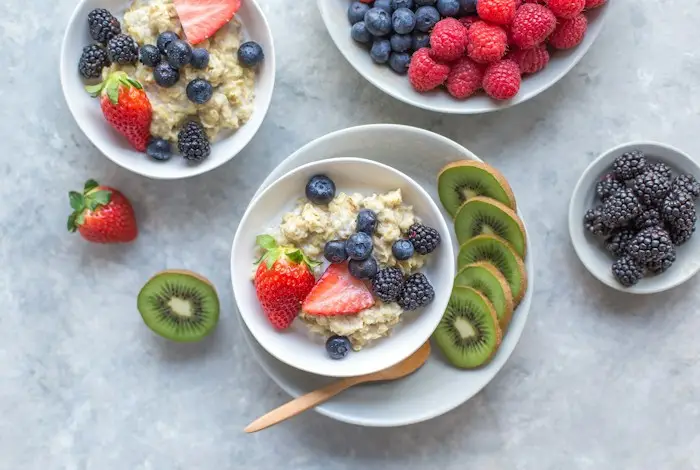
In practice, that means a bowl of iron-fortified oatmeal from a spoon at breakfast and soft strips of omelette for your baby to grab at lunch is a perfectly good plan. Whichever route you take, solids start at about 6 months, and breast milk or formula stays the main source of nutrition until 12 months.12
What is baby-led weaning?
Baby-led weaning (BLW) means skipping purées and offering soft finger foods from the start, so your baby feeds themselves.7 The AAP describes it as offering small portions of what’s on the family menu, letting your baby eat at their own pace, and not asking them to finish.1
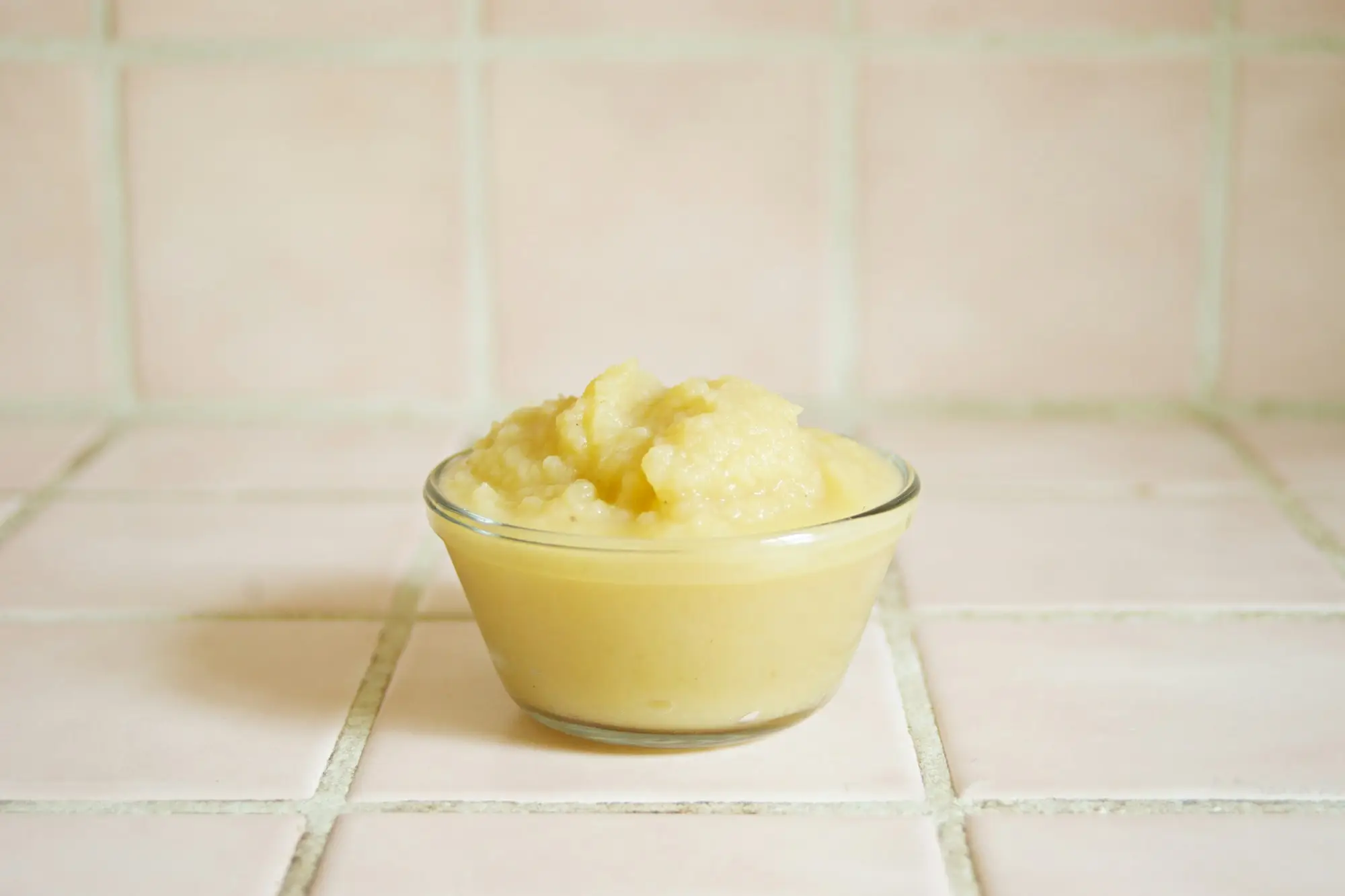
Traditional spoon-feeding starts with smooth purées and moves to thicker, lumpier textures and finger foods over the following months. The NHS encourages moving on from purées to mashed, lumpy and finger foods as soon as your baby can manage them.7
Is baby-led weaning safe? What the trials found
Most of the best evidence comes from the BLISS trial in New Zealand, which randomly assigned 206 families to usual care or to a modified version of BLW. The BLISS version was adapted to tackle the three big worries about BLW — iron, growth and choking — including advice to offer a high-iron food at every meal and to minimise choking risk.24
- Choking. About 35% of all babies choked at least once between 6 and 8 months, with no significant difference between groups. BLISS babies gagged more at 6 months but less than spoon-fed babies by 8 months.2
- Risky foods. In both groups, many babies were offered foods that pose a choking risk — 52% at 7 months and 94% at 12 months — which the researchers called concerning.2
- Growth. BLISS babies didn’t end up with a healthier weight than spoon-fed babies at 12 or 24 months. Parents did report less food fussiness and more enjoyment of food at 12 months.3
- Iron. Iron intake and iron status at 12 months were similar in both groups.4
A 2026 systematic review of four randomized trials came to similar conclusions — BLW didn’t raise choking risk or harm iron status — while cautioning that the evidence is limited.6
The trial that found BLW safe taught parents to offer iron at every meal and avoid choking-risk foods. Those rules are the point.
The real watch-out: iron
The AAP’s main concern with BLW is that the foods babies like best are often fruit and vegetables, which can leave meals low in iron and calories.1 A small cross-sectional study backs this up: babies following unmodified BLW ate less than half the iron of spoon-fed babies (1.6 vs 3.6 mg a day), along with less zinc and vitamin B12.5
The fix is simple: put an iron-rich food on the tray at every meal — soft shredded meat, flaked fish, mashed beans or lentils, strips of egg, or iron-fortified infant cereal on a preloaded spoon. Our guide to iron-rich foods for babies has baby-sized portions with milligrams.
Combining purées and baby-led weaning
Many families do both, and both the NHS and the AAP are comfortable with that.17 A combination approach can help in a few ways:
- Allergens. The AAP points out you may need to bend BLW rules to make sure your baby tries foods like peanut, egg and dairy around 6 months.1 Peanut butter is one food that’s safer from a spoon: the Dietary Guidelines describe mixing a small amount with breast milk or formula to thin it, and chunks or spoonfuls of thick nut butter are a choking hazard.128
- Iron. Spoon-fed fortified cereal is an easy, reliable iron source on days when finger foods mostly end up on the floor.
- Practicality. The AAP notes purées can be easier when travelling or on tight schedules.1
A practical combo: offer a spoon (or a preloaded spoon your baby can hold) for soft foods like yogurt and cereal, plus one or two finger foods at the same meal. Let your baby decide how much of each to eat.
Safe finger-food shapes by age
| Age | Shape and texture | Examples |
|---|---|---|
| About 6–7 months | Finger-length strips your baby can hold in a fist with a bit sticking out; soft enough to mash with gums | Soft-cooked carrot or broccoli, ripe banana, avocado, boiled egg, soft shredded meat |
| 7–9 months | More mashed and lumpy textures, plus soft finger foods at each meal | Thick lumpy mashes, soft pasta, flaked boneless fish, shredded mild cheese |
| 10–12 months | Small, soft pieces no bigger than ½ inch, as your baby learns to pick up small bits | Diced soft fruit, peas, small pieces of bread or cooked noodles |
The AAP suggests finger-shaped pieces about the size of a small baby carrot, and warns against round, coin-shaped slices of vegetables, fruit or meat.1 The NHS describes pieces about the size of your own finger, and says most babies can pick up small pieces by 10 to 12 months.7 The CDC suggests small cooked noodles, small pieces of bread and soft, ripe, peeled fruit.10
Whatever the age, avoid whole nuts, whole grapes, popcorn, raw carrot or apple chunks, hot dogs, and chunks or spoonfuls of nut butter.8 Quarter small round foods like grapes and cherry tomatoes, sit your baby upright and buckled in a high chair, and never leave them alone while eating.17 No honey before 12 months — it can cause infant botulism.11
Gagging vs choking
Gagging is normal, especially in the first weeks of finger foods. A gagging baby’s eyes may water, and they may push their tongue forward or retch to bring food forward in their mouth.7 Stay calm and let them work it out.
Choking is different. A choking baby can’t breathe, cry or make noise, may gasp or wheeze, may turn bluish, and may become limp.9 That’s an emergency: call 911 and start infant first aid. A CPR and first aid course before starting solids is worth the time.9
For how much to offer at each stage, see how much solid food a baby should eat.
When to talk to your pediatrician
Check in with your baby's doctor if
- Your baby was born prematurely, struggles to sit up, or can't manage soft solids — the AAP says it's better to wait
- They gag at nearly every meal, or never seem to progress past smooth purées
- Most of what they eat is fruit and vegetables, with little meat, beans, egg or fortified cereal
- They have severe eczema or an egg allergy, before you introduce peanut
- Call 911 if your baby can't breathe, cry or make a sound, turns blue, or goes limp
Common questions
Is baby-led weaning better than purées?
Neither has been shown to be clearly better. The NHS says there's no right or wrong way, and the American Academy of Pediatrics notes there are very few studies on the health benefits of baby-led weaning. What matters most is that your baby eats a variety of foods, including iron-rich ones.
Is baby-led weaning safe?
It can be, when done carefully. A randomized trial of 206 babies found those following a version of baby-led weaning that included choking-safety advice didn't choke more often than spoon-fed babies. Soft, finger-shaped foods, an upright seat and constant supervision are essential.
Can you combine purées and baby-led weaning?
Yes. Both the NHS and the AAP say families can mix the two — for example, spoon-feeding iron-fortified cereal or yogurt while also offering soft finger foods at the same meal.
Does baby-led weaning cause low iron?
It can if meals lean on fruit and vegetables. One small study found babies following unmodified baby-led weaning ate less iron than spoon-fed babies, while a trial that taught parents to offer a high-iron food at every meal found no difference in iron status at 12 months.
What's the difference between gagging and choking?
Gagging is a normal reflex while babies learn to eat — their eyes may water and they may push food forward with their tongue or retch. Choking is different: the baby can't breathe, cry or make noise and may turn bluish. Choking is an emergency.
Sources
- American Academy of Pediatrics, HealthyChildren.org. 2024. Baby-Led Weaning: Is It Safe?.
- Fangupo LJ, et al. Pediatrics. 2016;138(4):e20160772. A Baby-Led Approach to Eating Solids and Risk of Choking.
- Taylor RW, et al. JAMA Pediatrics. 2017;171(9):838-846. Effect of a Baby-Led Approach to Complementary Feeding on Infant Growth and Overweight: A Randomized Clinical Trial.
- Daniels L, et al. BMJ Open. 2018;8(6):e019036. Impact of a modified version of baby-led weaning on iron intake and status: a randomised controlled trial.
- Morison BJ, et al. BMJ Open. 2016;6(5):e010665. How different are baby-led weaning and conventional complementary feeding? A cross-sectional study of infants aged 6-8 months.
- Márquez-Díaz RR, et al. Nutrition Reviews. 2026. Baby-Led Weaning vs Traditional Spoon-Feeding: A Systematic Review of Infant Growth, Choking Risk, and Iron Status Among Infants Aged 6-12 Months.
- NHS (UK). Your baby's first solid foods.
- Centers for Disease Control and Prevention. Choking Hazards — Infant and Toddler Nutrition.
- American Academy of Pediatrics, HealthyChildren.org. 2026. Choking Prevention for Babies & Children: What Every Parent Needs to Know.
- Centers for Disease Control and Prevention. Fingers, Spoons, Forks, and Cups.
- Centers for Disease Control and Prevention. Foods and Drinks to Avoid or Limit — Infant and Toddler Nutrition.
- U.S. Department of Agriculture and U.S. Department of Health and Human Services. 2026. Infancy & Early Childhood, page 6. Dietary Guidelines for Americans, 2025–2030.
This article is for general information and isn't a substitute for advice from your child's doctor. Our editorial standards.