On this page
The short version
- One-year-olds need about 1,000 calories a day, according to the American Academy of Pediatrics.
- Spread it over 3 meals and 2 snacks. A toddler serving is roughly a quarter of an adult's.
- About 16 oz (2 cups) of whole milk a day is enough; milk shouldn't replace meals.
- Appetite drops after the first birthday and swings day to day. Judge the week, not the meal.
The short answer
A one-year-old needs about 1,000 calories a day, divided among three meals and two snacks, according to the American Academy of Pediatrics.1 In real food, that’s a few tablespoons of each food at a meal, a couple of small snacks, and about 2 cups of milk across the day.
That number is a ballpark, not a target to hit. The AAP is blunt that toddler eating is “erratic and unpredictable”: a one-year-old may eat everything in sight at breakfast and very little for the rest of the day, or eat noticeably more or less than 1,000 calories from one day to the next.1 Over several days, it tends to balance out.
| Age | Boys | Girls |
|---|---|---|
| 12 months | 800 | 800 |
| 15 months | 900 | 800 |
| 18 months | 1,000 | 900 |
| 21–23 months | 1,000 | 1,000 |
Why the numbers don’t all match
You’ll see slightly different figures, even from the same organizations. The 2020–2025 Dietary Guidelines estimate 700 to 1,000 calories a day for most toddlers aged 12 to 23 months, rising through the second year.5 A separate AAP page offers a rule of thumb of about 40 calories per inch of height for ages 1 to 3 — which works out higher for a tall or active child.3
We use the AAP’s round figure of about 1,000 because it sits within both and is easy to remember. In practice, you don’t need to count calories for a healthy toddler. As the AAP puts it, a child who is growing well is getting enough to eat.6 Growth checks at your pediatrician’s office are the real measure. For the numbers from 9 months to age 8 side by side, see how many calories a child needs by age.
How much per meal?
Less than you’d think. A toddler serving is about a quarter of an adult serving.3 The AAP describes an average toddler-sized meal like this:
That’s the AAP’s guide to a modest meal.3 Its sample menu for a one-year-old (below) uses bigger amounts, such as ½ cup of vegetables at lunch.2 Think of the gap between the two as the normal range. Start small, and let your child ask for more.
Serve less than you think they’ll eat. It’s easier to give seconds than to fight over what’s left.
A sample day for a one-year-old
This is adapted from the AAP’s sample menu, which was planned for a one-year-old weighing about 21 pounds (9.5 kg).2 We’ve listed whole milk, which the AAP advises from 12 to 24 months.4
| Meal | What to offer |
|---|---|
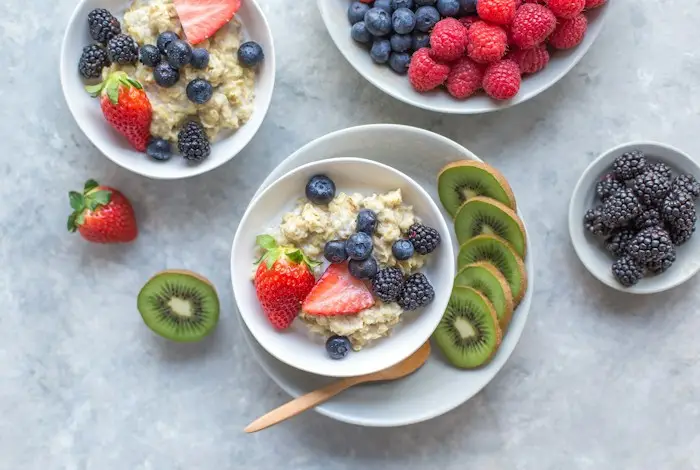
| Breakfast | ½ cup iron-fortified cereal or 1 cooked egg; ½ banana, sliced; 2–3 large strawberries, sliced; ½ cup milk |
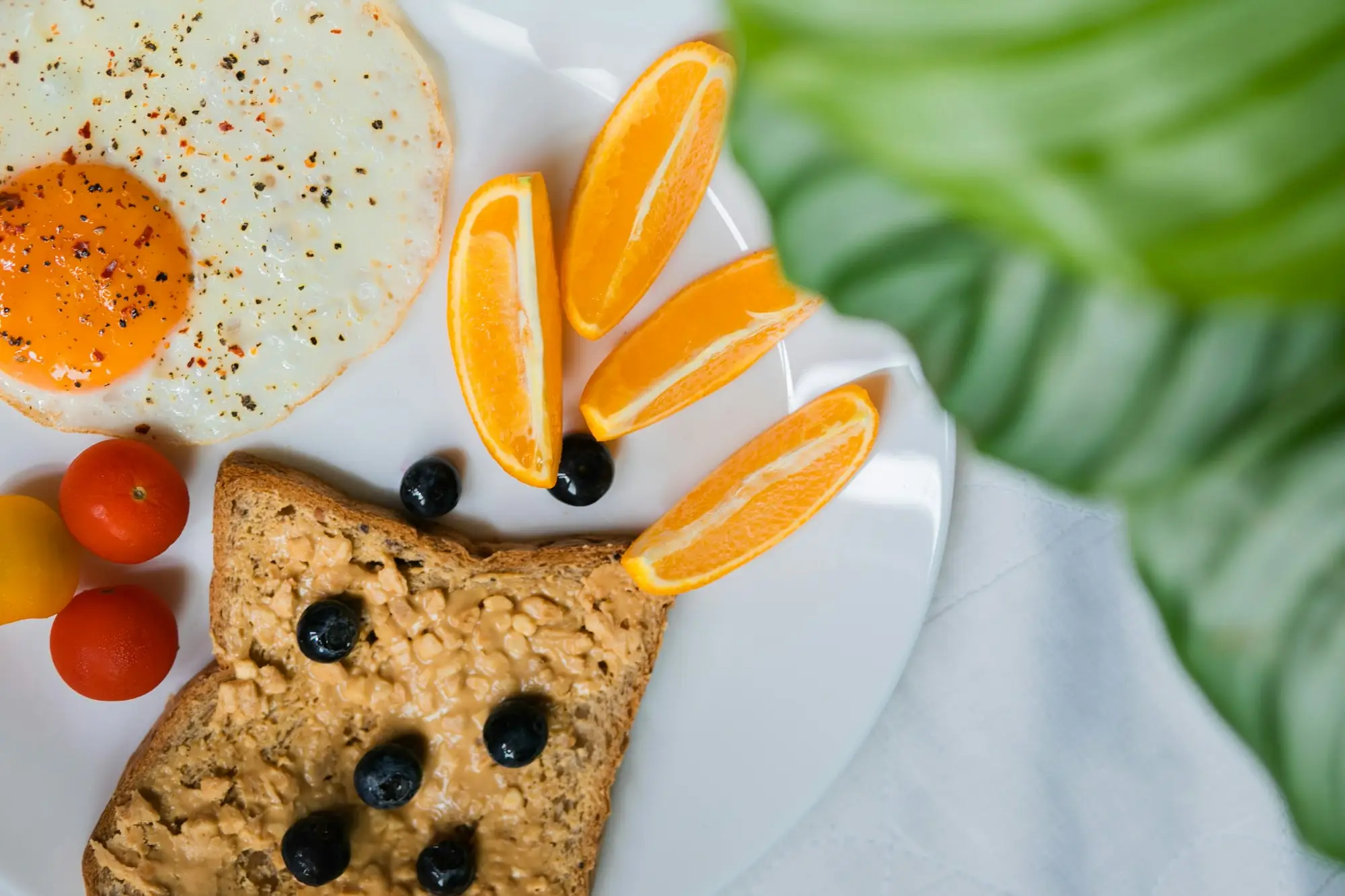
| Morning snack | 1 slice toast or whole-wheat muffin with 1–2 tbsp cream cheese or peanut butter (spread thinly), or ½ cup yogurt with cut-up fruit; water |
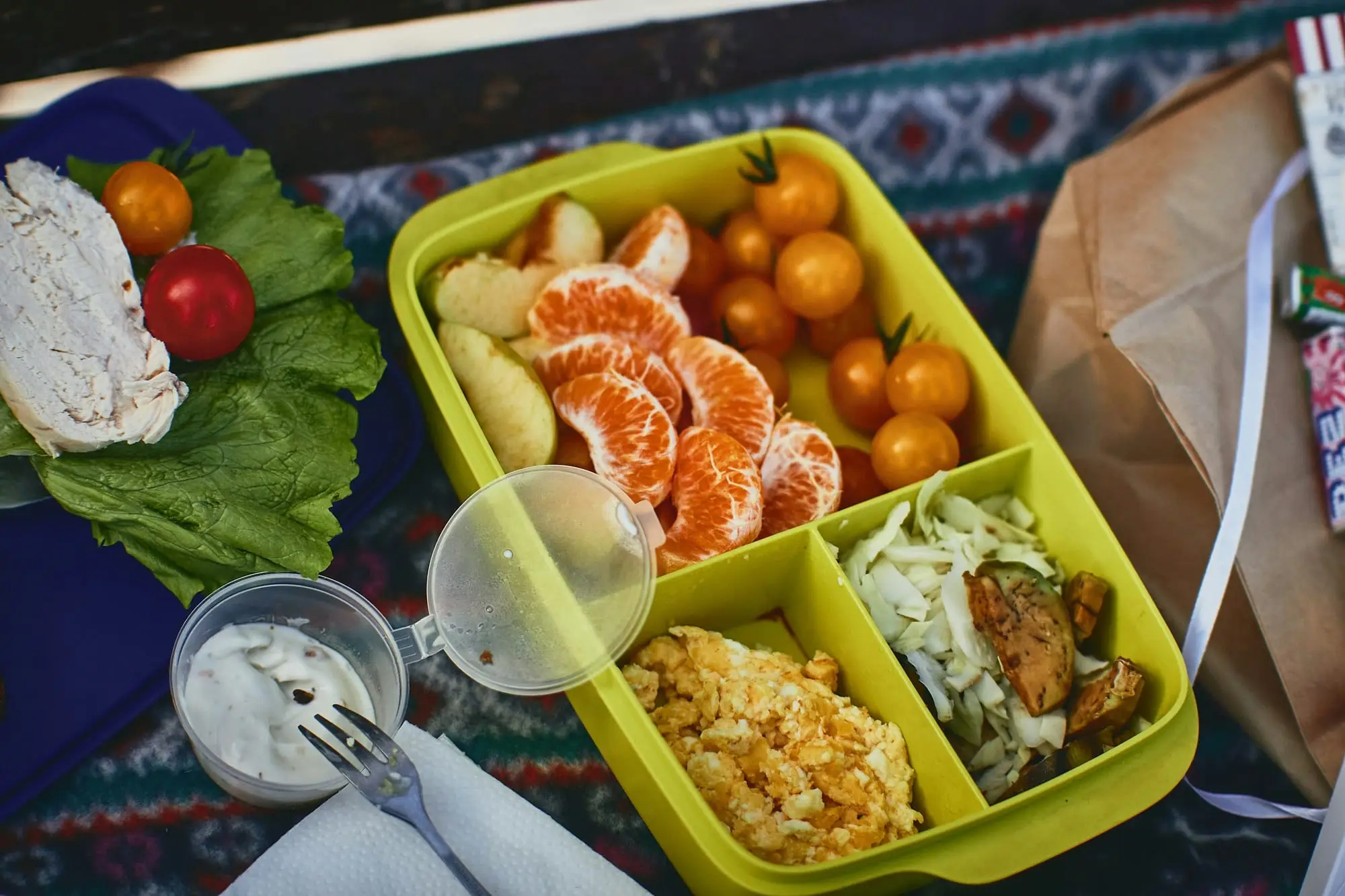
| Lunch | ½ sandwich (turkey, chicken, tuna, egg salad or peanut butter); ½ cup cooked green vegetables; ½ cup milk |
| Afternoon snack | 1–2 oz cheese, shredded or diced small, or 2–3 tbsp fruit or berries; water |
| Dinner | 2–3 oz cooked meat, ground or diced; ½ cup cooked yellow or orange vegetables; ½ cup whole-grain pasta or potato; ½ cup milk |
The AAP’s menu offers milk at the snacks too.2 We’ve suggested water there instead so the day lands near 2 cups of milk rather than well above it. Cut everything into small, soft pieces: children don’t chew with a grinding motion until about age 4, and foods like whole grapes, nuts and chunks of peanut butter are choking risks.1
Breakfast is often a one-year-old’s best meal, so it’s a good place for iron-fortified cereal, eggs and fruit. If your toddler eats well in the morning and picks at dinner, that’s a common pattern — see why toddlers refuse dinner.
How often should a 1-year-old eat?
The AAP describes three meals and two snacks a day for one-year-olds.1 Small stomachs can’t hold enough at meals alone, so snacks are mini-meals, not treats.6
A predictable rhythm helps: meals and snacks at roughly the same times each day, eaten sitting down, with water in between. Grazing on crackers or sipping milk all day makes it hard for a toddler to arrive at the next meal hungry. Our guide to how many snacks a toddler should have goes into timing.
Where milk fits in
From 12 to 24 months, about 16 oz (2 cups) of whole milk a day is enough.4 Water is the other everyday drink. Juice isn’t needed; if you offer it, the AAP’s limit for ages 1 to 3 is 4 oz a day of 100% juice.4
Milk is where many one-year-olds overshoot. A bottle or cup at every meal, snack and bedtime can easily add up to twice the recommended amount, leaving less room for iron-rich food. The AAP suggests finishing the move from bottle to cup between 12 and 18 months, which makes the amount easier to keep in check.7 More in how much milk a toddler should drink.
Fat is not the enemy at this age
Don’t put a one-year-old on a low-fat diet. The AAP says babies and young toddlers should get about half their calories from fat, which supports growth and brain development.1 Whole milk, yogurt, cheese, eggs, nut butters (spread thinly), avocado and olive oil are all good choices.2
What to go easy on: foods that are heavily salted, sweetened, buttered or spiced. They mask the natural taste of food while your toddler is still learning what they like.1
Why appetite drops after the first birthday
Many parents notice a sharp drop in appetite right around the first birthday. A baby who ate eagerly now turns their head away after a few bites. The reason is simple: growth slows down, so your child genuinely needs less food than before.1 For the months before the first birthday, see how much solid food a baby should eat.
The AAP’s advice is to encourage but not pressure or force eating, and to keep offering a range of foods from every group.1 If a food group goes missing for a few days, don’t worry; it’s a long-term gap that matters.6
When to talk to your pediatrician
Check in with your child's doctor if
- Your toddler is losing weight, or isn't gaining at their checkups
- They regularly gag, choke or struggle to swallow at meals
- They refuse a whole food group (or most foods) for weeks at a time
- They drink much more than 2 cups of milk a day and won't eat much food
- Low appetite comes with fever, tiredness or other signs of illness
Common questions
How much should a 1-year-old eat a day?
About 1,000 calories a day, divided among three meals and two snacks, according to the American Academy of Pediatrics. The amount varies from day to day, and that's normal.
How much should a 1-year-old eat per meal?
Less than most parents expect. The AAP describes a toddler-sized meal as about 1 ounce of meat or 2–3 tablespoons of beans, 1–2 tablespoons each of vegetables and fruit, and a quarter slice of bread — roughly a quarter of an adult portion.
What should a 1-year-old eat for breakfast?
The AAP's sample menu suggests ½ cup of iron-fortified cereal or 1 cooked egg, half a sliced banana, 2–3 sliced strawberries and ½ cup of milk.
How often should a 1-year-old eat?
Three meals and two snacks a day is the usual rhythm the AAP describes. Offering food at roughly regular times helps toddlers come to meals hungry rather than grazing all day.
How much milk should a 1-year-old drink?
About 16 oz (2 cups) of whole milk a day between 12 and 24 months, per the AAP. Much more than that can leave too little room for food.
My 1-year-old suddenly eats much less. Is that normal?
Usually, yes. Growth slows after the first year, so many toddlers eat noticeably less than they did as babies. A child who is growing well is getting enough; check with your pediatrician if they're losing weight or seem unwell.
Sources
- American Academy of Pediatrics, HealthyChildren.org. Feeding & Nutrition Tips: Your 1-Year-Old.
- American Academy of Pediatrics, HealthyChildren.org. Sample Menu for a 1-Year-Old Child.
- American Academy of Pediatrics, HealthyChildren.org. Serving Sizes for Toddlers.
- American Academy of Pediatrics, HealthyChildren.org. Recommended Drinks for Children Age 5 & Younger.
- U.S. Department of Agriculture and U.S. Department of Health and Human Services. Chapter 2 and Appendix 2. Dietary Guidelines for Americans, 2020–2025.
- American Academy of Pediatrics, HealthyChildren.org. Making Sure Your Child is Eating Enough.
- American Academy of Pediatrics, HealthyChildren.org. From Bottle to Cup: Helping Your Child Make a Healthy Transition.
This article is for general information and isn't a substitute for advice from your child's doctor. Our editorial standards.