On this page
The short version
- We use the Dietary Guidelines figure — about 14 g of fiber a day for ages 2 to 3 — as the everyday target.
- The National Academies' figure for ages 1 to 3 is higher, at 19 g; the "age + 5" rule is lower, at 7–8 g. Think of them as the top and bottom of a sensible range.
- Most U.S. children eat far less fiber than recommended, so nearly every family has room to add some.
- Add fiber gradually, alongside water — and serve high-fiber foods in toddler-safe forms.
The short answer
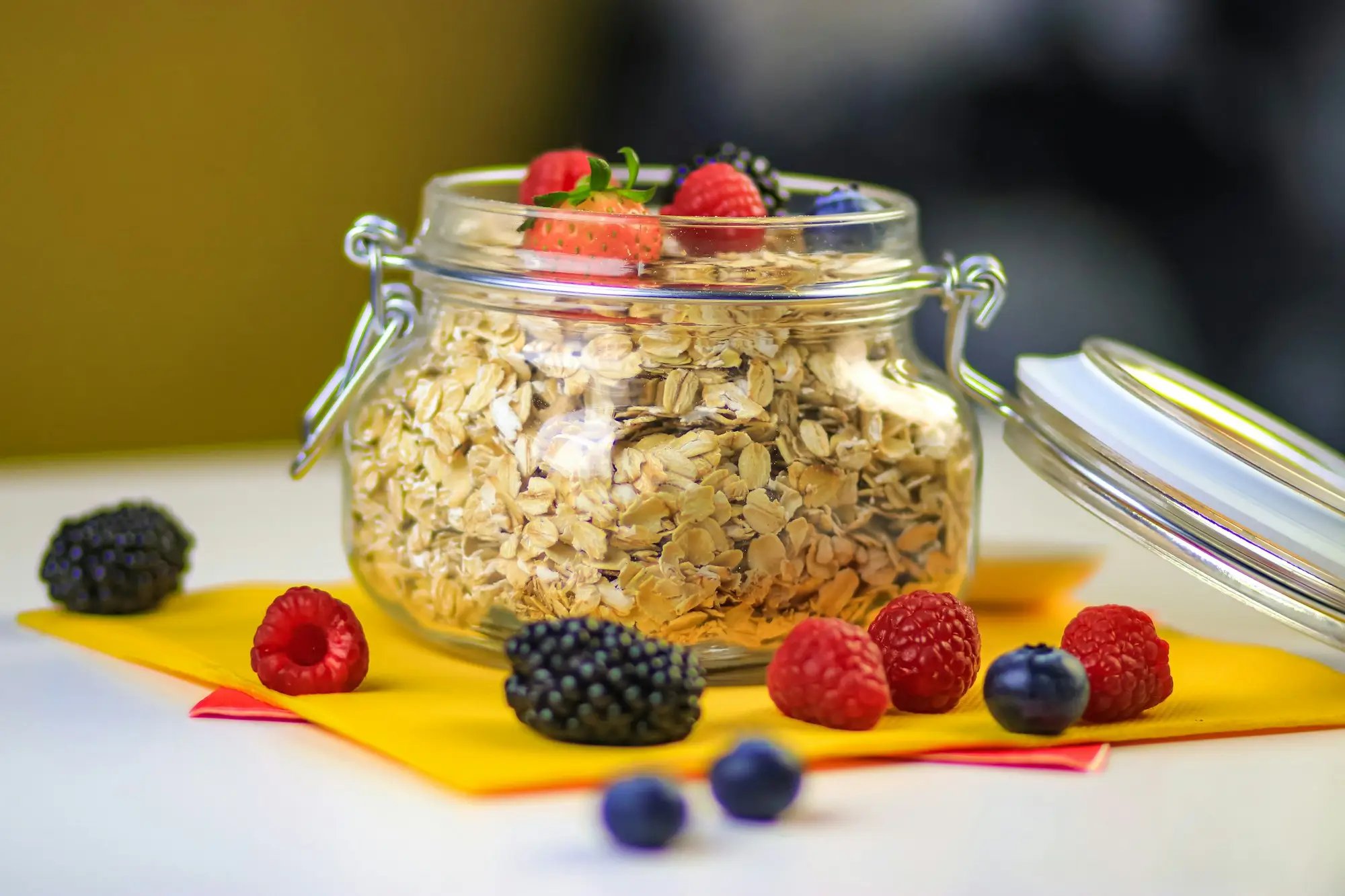
A 2- or 3-year-old needs about 14 grams of fiber a day, according to the 2020–2025 Dietary Guidelines for Americans (the 2025–2030 edition doesn’t set a fiber number).2 That’s the figure we use at Growing Plate. In food terms, a bowl of oatmeal with half a cup of raspberries at breakfast gets a toddler roughly halfway there.6
If you’ve searched this before, you’ve probably seen other numbers — 19 grams, or “your child’s age plus 5”. They’re not mistakes. They come from different sources, built for different purposes, and they’re easier to use once you can see them side by side.
| Age | National Academies (AI) | Dietary Guidelines goal | Age + 5 (minimum) |
|---|---|---|---|
| 12–23 months | 19 g | 19 g | Not used under 2 |
| 2–3 years | 19 g | 14 g | 7–8 g |
| 4–8 years | 25 g | 17 g (girls), 20 g (boys) | 9–13 g |
| 9–13 years | 26 g (girls), 31 g (boys) | 22 g (girls), 25 g (boys) | 14–18 g |
Why the numbers differ
The National Academies’ Adequate Intake (19 g at ages 1–3). This is the official reference value in the U.S. Dietary Reference Intakes.1 It’s an Adequate Intake, not a Recommended Dietary Allowance — the label used when there isn’t enough evidence to pin down exactly how much children need.1 The fiber reference is built on a ratio of 14 grams of fiber for every 1,000 calories eaten.5
The Dietary Guidelines goal (14 g at ages 2–3). The Dietary Guidelines apply that same 14 g per 1,000 calories to the calorie level they plan meals around — 1,000 calories a day for a 2- or 3-year-old — which gives 14 grams.2 For babies between 12 and 23 months, the Guidelines simply use the 19 g Adequate Intake.2
The “age + 5” rule (7–8 g at ages 2–3). This comes from a 1995 expert recommendation published in Pediatrics, which proposed that children over 2 eat at least their age plus 5 grams of fiber a day, with a safe range up to age plus 10.3 The AAP’s parenting site still suggests it as an easy way to keep count.4 It was designed as a floor that’s realistic and safe, not as an ideal.
Treat “age + 5” as the floor, 14 grams as the everyday target, and 19 grams as the top of the range for a big eater.
Which one we follow
We use the Dietary Guidelines figure because it scales with how much a child actually eats — and toddlers eat far less than older children. A small 2-year-old eating 1,000 calories a day isn’t going to fit 19 grams of fiber in comfortably. We treat “age + 5” as the minimum worth aiming for on a picky day, and the 19 g Adequate Intake as the upper end for a toddler with a big appetite.
Most kids fall short — by a lot
Fiber is one of the “dietary components of public health concern” in the Dietary Guidelines, meaning most Americans, children included, don’t get enough.2 A study of U.S. children aged 2 to 18 found average intakes of about 6.4 grams per 1,000 calories — less than half the 14-gram yardstick — and most children fell short by more than 60%.5
So if your toddler’s fiber looks low, you’re in good company. The fix isn’t supplements; it’s a few more beans, fruits, vegetables and whole grains across the week.
What 14 grams looks like on a real plate
The figures below are for toddler-sized servings, worked out from USDA FoodData Central.6

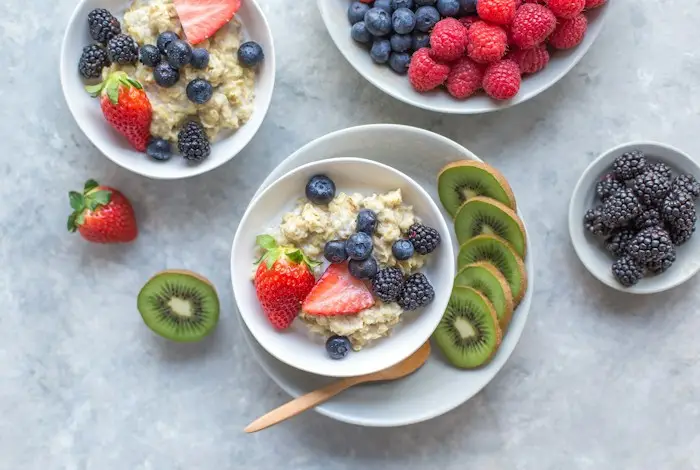
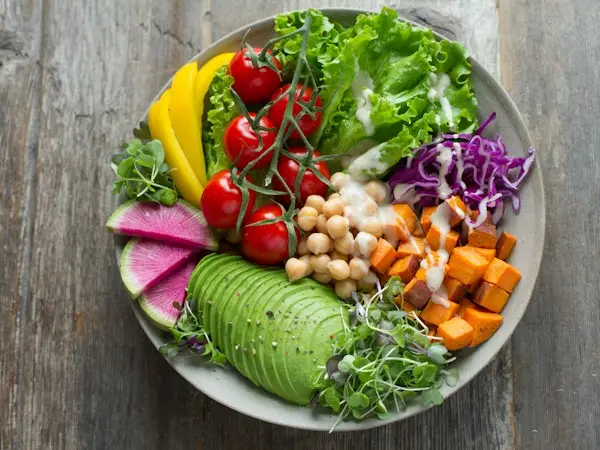
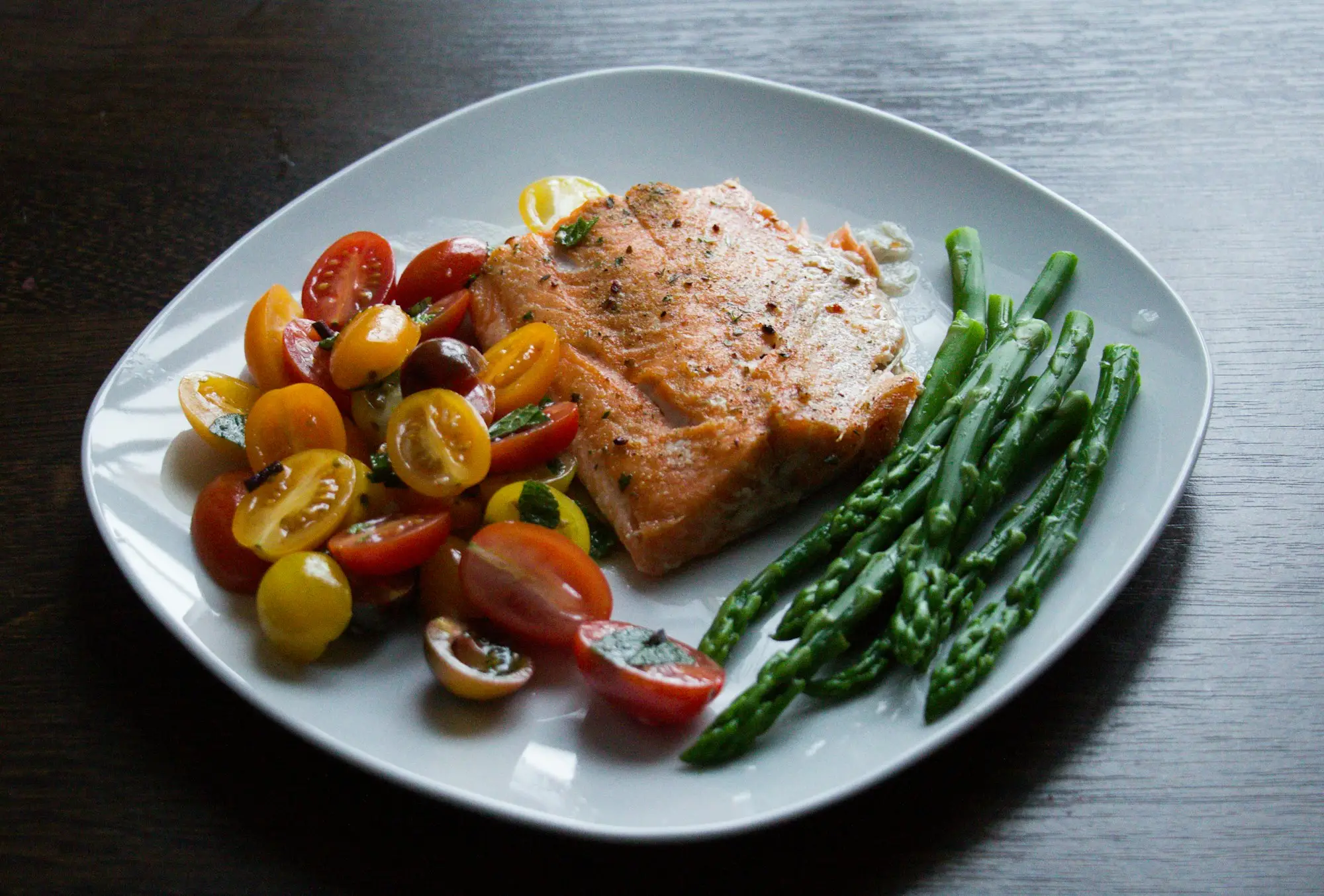
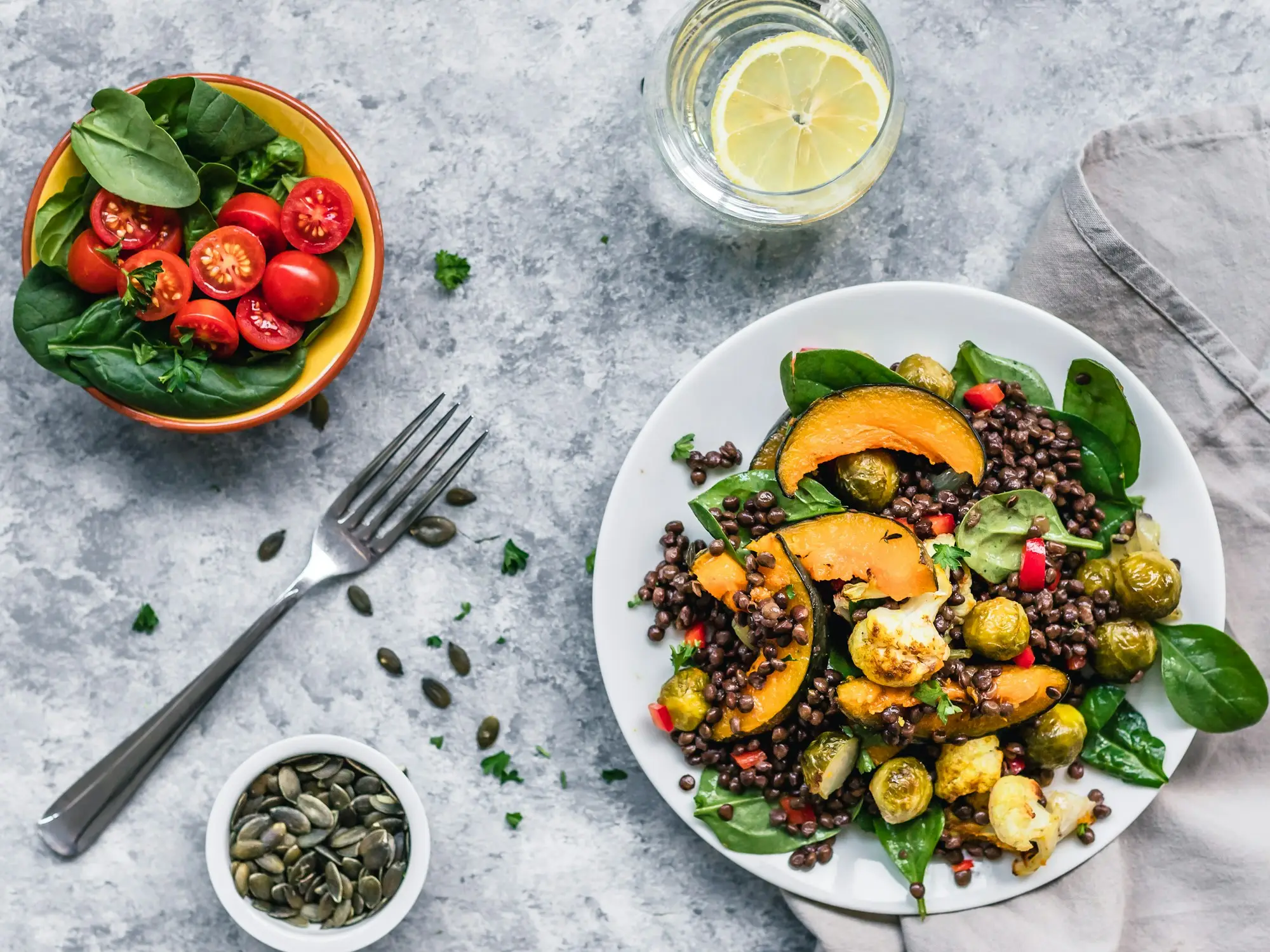
Photos: Ella Olsson, Melissa Belanger, Anna Pelzer / Unsplash
Here’s one ordinary day that reaches about 14 grams for a 2-year-old:6
- Breakfast: oatmeal made with ⅓ cup oats, topped with ½ cup squashed raspberries (≈ 6.5 g)
- Lunch: 1 slice whole-wheat toast with mashed black beans, about ¼ cup (≈ 5.5 g)
- Dinner: ¼ cup peas alongside whatever the family is eating (≈ 2 g)
Other easy wins: half a small baked sweet potato, a few chopped prunes stirred into yogurt, or swapping white pasta for whole-wheat. Keep foods toddler-safe — the AAP lists popcorn, whole nuts and seeds, and raw apple or carrot pieces among choking hazards for children under 4.7 Grate, cook, mash or thinly slice instead.
Fiber, water and constipation
Fiber’s best-known benefit in childhood is keeping bowel movements regular, which is why it’s usually the first thing suggested for a constipated toddler.3 The AAP lists beans, vegetables, fruits and whole grains as good sources.4 If constipation is the reason you’re here, our guide to foods that help toddler constipation goes further.
Two cautions from the AAP. Drinking more water on its own isn’t an effective treatment for constipation — but fiber supplements taken without enough water can make constipation worse.4 Add fiber from food, raise it gradually over a week or two, and keep water on offer. Large amounts of milk can also crowd out fiber-rich foods; see how much milk a toddler should drink.
Adding fiber without a fight
- Start at breakfast. Oats, whole-wheat toast and berries are easy places to add fiber to a meal most toddlers already eat.
- Mix, don’t swap. Stir a spoonful of mashed beans or lentils into a pasta sauce your child already likes.
- Go gradually. Add one fiber-rich food at a time, so you can see how your child gets on with it.
- Keep water on the table. Offer it with meals and between them.
When to talk to your pediatrician
Call your child's doctor if
- Your child is often constipated, or stools are hard and painful to pass
- There's blood in the stool, or tummy pain that doesn't settle
- Constipation comes with poor appetite, vomiting or weight loss
- You're thinking about giving a fiber supplement
For most toddlers, fiber is simply a matter of habit: a fruit or vegetable at every meal, beans a few times a week, and whole grains where you can. You don’t need to hit an exact number every day.
Common questions
How much fiber does a toddler need a day?
About 14 grams a day for a 2- or 3-year-old, according to the 2020–2025 Dietary Guidelines for Americans (the 2025–2030 edition doesn't set a fiber number). The National Academies set a higher Adequate Intake of 19 grams for ages 1 to 3, and the "age + 5" rule gives a minimum of 7 to 8 grams.
What is the "age + 5" rule for fiber?
It's a rule of thumb from a 1995 expert recommendation published in Pediatrics, and still used on the American Academy of Pediatrics' parenting site — add 5 to your child's age to get a minimum daily fiber target in grams. It applies to children over 2.
Can a toddler have too much fiber?
The 1995 Pediatrics recommendation suggested a safe range of up to age plus 10 grams a day. The AAP warns that fiber supplements taken without enough water can make constipation worse, so stick to fiber from everyday foods, added gradually, with water on offer.
What are good high-fiber foods for toddlers?
Beans, lentils, peas, berries, pears, oats, whole-wheat bread and avocado are all good sources. A quarter cup of cooked lentils or half a cup of raspberries has about 4 grams.
Does fiber help toddler constipation?
It can help, as part of a broader plan. The AAP lists beans, vegetables, fruits and whole grains as good sources and notes that fiber supplements taken without enough water can make constipation worse. Talk to your pediatrician if constipation keeps coming back.
Sources
- Institute of Medicine (National Academies), via NCBI Bookshelf. Dietary Reference Intakes: Recommended Dietary Allowances and Adequate Intakes, Total Water and Macronutrients.
- U.S. Department of Agriculture and U.S. Department of Health and Human Services. 2020. Dietary Guidelines for Americans, 2020–2025 (Chapters 1 and 3, Appendix 1).
- Williams CL, Bollella M, Wynder EL. Pediatrics. 1995;96(5 Pt 2):985–8. A new recommendation for dietary fiber in childhood.
- American Academy of Pediatrics, HealthyChildren.org. Constipation in Children.
- Brauchla M, Juan W, Story J, Kranz S. J Nutr Metab. 2012;2012:736258. Sources of dietary fiber and the association of fiber intake with childhood obesity risk (in 2–18 year olds) and diabetes risk of adolescents 12–18 year olds: NHANES 2003–2006.
- U.S. Department of Agriculture, Agricultural Research Service. SR Legacy data; amounts scaled to toddler portions by Growing Plate. FoodData Central.
- American Academy of Pediatrics, HealthyChildren.org. Choking Prevention for Babies & Children: What Every Parent Needs to Know.
This article is for general information and isn't a substitute for advice from your child's doctor. Our editorial standards.