On this page
The short version
- Children aged 4 to 8 need about 19 g of protein a day, so a 4-year-old and a 7-year-old share the same number.
- There's no official per-meal target; a protein food at each meal and snack spreads it out easily.
- Milk helps: every ounce of cow's milk has 1 g of protein.
- Variety counts more than hitting a number every day.
The daily number
Children aged 4 to 8 need about 19 grams of protein a day, according to the U.S. Recommended Dietary Allowances.1 That’s the number for a 7-year-old, and it’s the same for a 4-year-old, because the target covers the whole age band and doesn’t split by year or by sex.1
In real food, 19 grams is less than it sounds. The American Academy of Pediatrics (AAP) puts it plainly: children don’t need as much protein as you might think.2 A bowl of cereal with a glass of milk, a sandwich with cheese or nut butter, and a yogurt or egg at another meal gets most children there.
| Age | Protein per day |
|---|---|
| 4–8 years | 19 g |
| 9–13 years | 34 g |
The target steps up at age 9, to 34 g.1 If your child is older, see how much protein a 10-year-old needs. If you have a younger one, our guide to how much protein a toddler needs covers ages 1 to 3.
How is 19 grams worked out?
The Recommended Dietary Allowance for ages 4 to 8 is 0.95 grams per kilogram of body weight a day, which comes to 19 g for a reference child.1 Your own child may weigh a little more or less than the reference, so treat 19 g as a sensible average rather than a line they must cross every day.
The same tables allow protein to supply 10 to 30 percent of a child’s calories, a wide range that most ordinary diets sit comfortably inside.1 The authors of that review add that this range should be read with caution, so don’t aim for a percentage.1
How much protein should a kid have for breakfast?
There’s no official per-meal target. Protein needs are set as a daily total, so the useful question is how to spread it out.
As simple arithmetic, not an official rule: if 19 g is shared across three meals and a snack or two, each one needs only about 5 to 6 grams. That’s easily met with a protein food at each sitting. At breakfast, good options include:
- Milk. Every ounce of cow’s milk has 1 g of protein, so a cup (8 oz) brings about 8 g.2
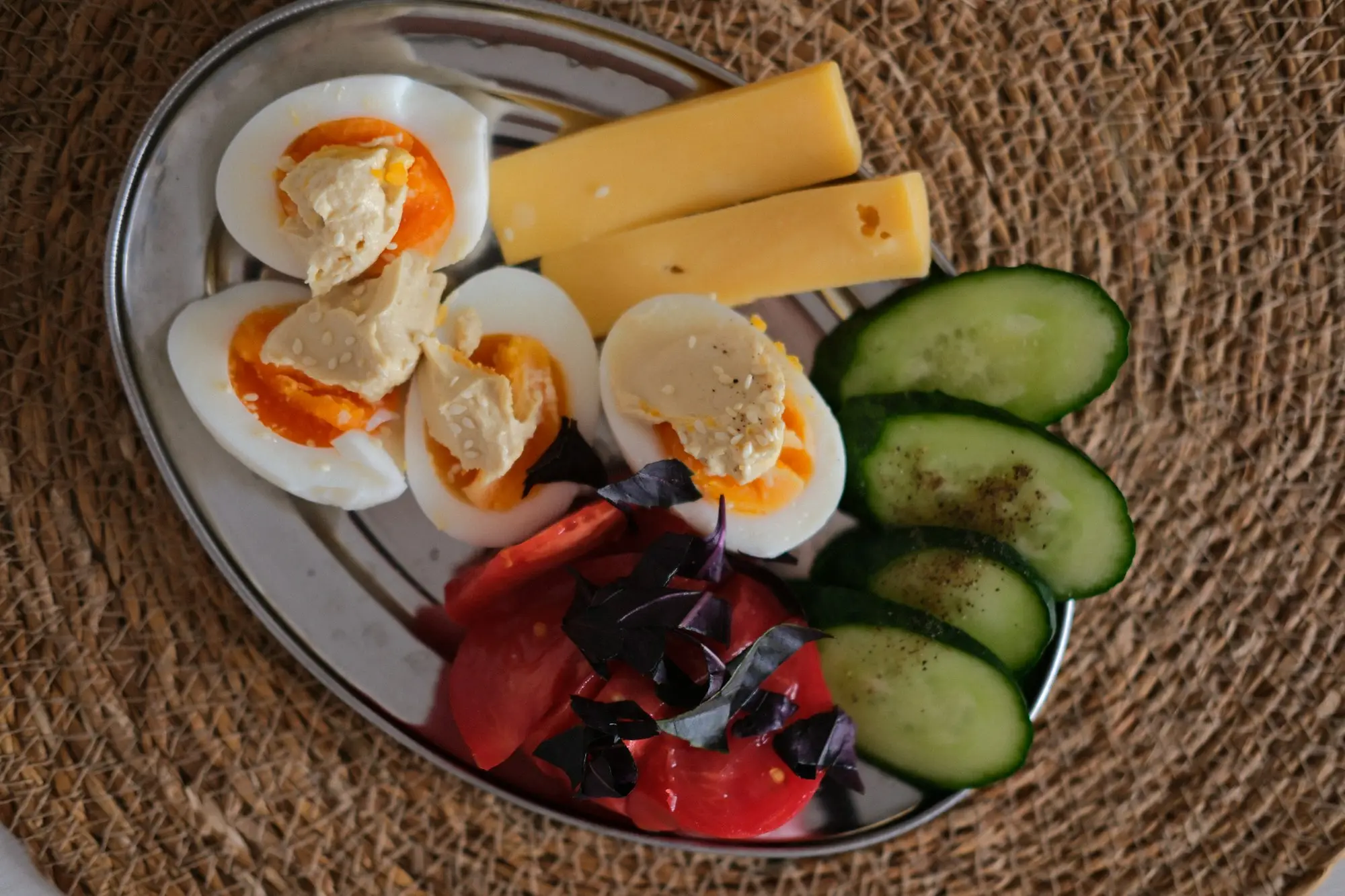
- Eggs, yogurt or mozzarella string cheese. All are on the AAP’s list of protein-rich foods.2
- Nut butter on toast. Another food on the AAP’s list; spread it thinly.
- Oatmeal or whole wheat pasta. Grains carry some protein too.2
Which foods count?
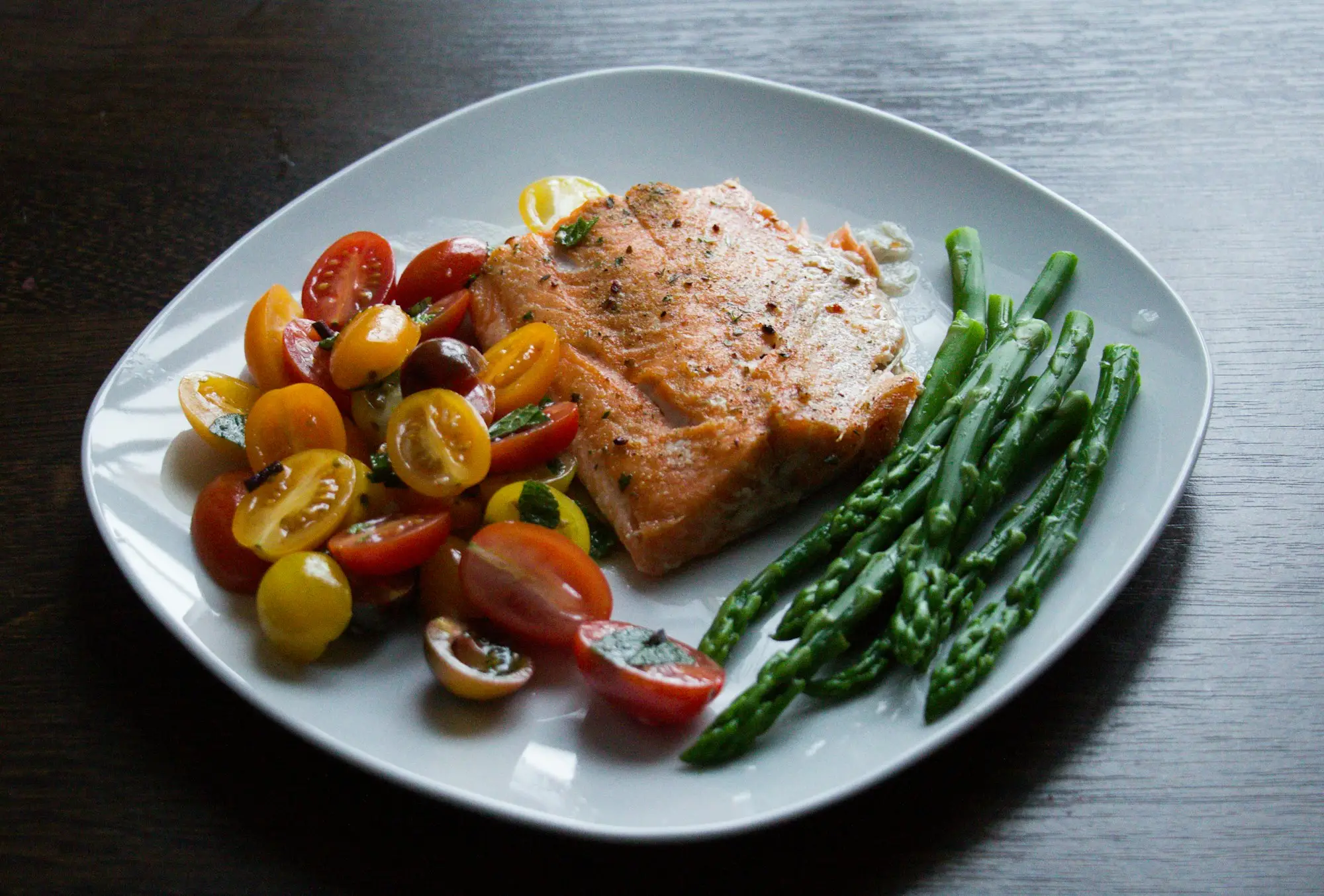
Most animal foods and many plant foods supply protein. The AAP lists salmon, fish sticks, eggs, turkey lunch meat, yogurt and mozzarella string cheese, plus lentils, nut butter, hummus, oatmeal, whole wheat pasta, soy milk and tofu. Even peas, broccoli and potatoes have some.2
Animal products contain high-quality protein and a full array of amino acids, the building blocks the body can’t make on its own.3 Eggs, dairy, lentils and tofu are all on the AAP’s list, so a child who eats little meat has plenty of other options.
Portions should be child-sized until adolescence, so a 7-year-old’s serving of chicken or beans is smaller than yours.4 For ideas that fit a school day, see our 2-year-old lunch ideas for portion cues and swap in a bigger serving for an older child.
Does a 4-year-old need less than a 7-year-old?
On paper, no. The 19 g target applies from a child’s fourth birthday until their ninth.1 In practice, a 7-year-old eats more food than a 4-year-old, so their protein arrives in larger portions rather than from a different diet.
That’s also why a 4-year-old’s plate looks smaller, not different. If you’re cooking for both ages at once, one family meal with a protein food on the table works for each of them.
One safety note for the younger end of this age band: serve nut butter spread thinly on bread or toast, never in a thick spoonful, and keep whole nuts off the menu until your child is at least 4.
A simple day that adds up
Here’s one ordinary day, using only the one protein figure the AAP gives us, that a cup of milk has about 8 g:2
- Breakfast: oatmeal made with milk, plus fruit.
- School lunch: a sandwich with cheese, turkey or nut butter, and a cup of milk, which alone brings about 8 g.
- After school: yogurt or string cheese.
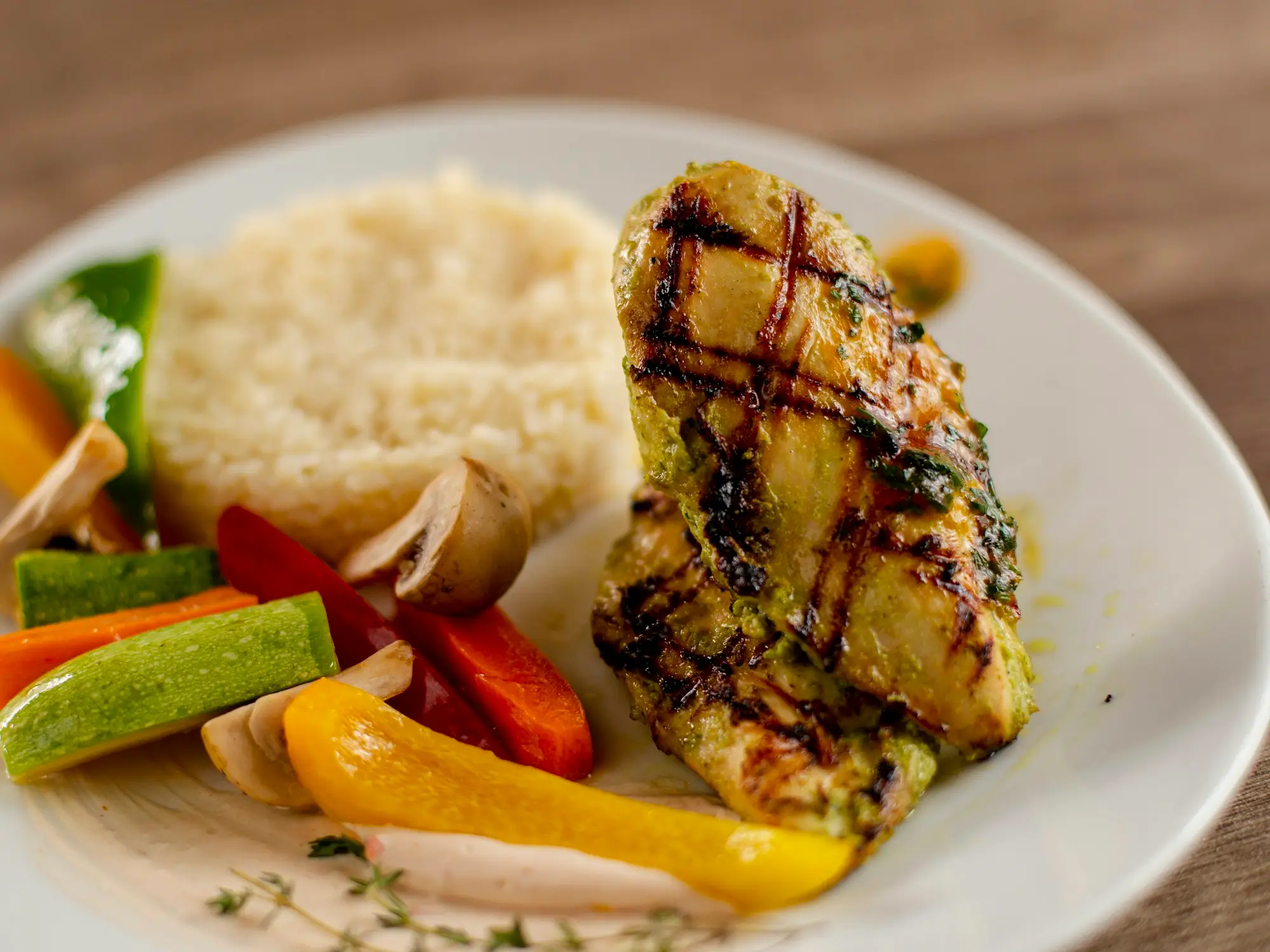
- Dinner: fish, beans or chicken with a grain and a vegetable.
You don’t need to total the grams. The point is that a protein food shows up at most sittings. A child who eats that way, with milk or yogurt as a regular part of the day, is very likely meeting the 19 g target.
Is my child getting enough?
Most likely, yes. Your child needs protein so their body can grow and function properly,3 and the AAP recommends a variety of foods from the five major food groups rather than counting grams.3 A child who has dairy or another protein food at most meals is very likely covered.
A picky stretch doesn’t change that picture overnight. Targets are averages across days and weeks, so a day of plain pasta followed by an egg and yogurt evens out. For a child who refuses most proteins, the AAP’s list above gives plenty of less obvious options, from hummus to string cheese.2
Do I need protein shakes or powder?
For ordinary growth, no. Food is the usual way children meet the target. If you’re considering one for a specific reason, talk to your pediatrician first. Our guide on whether kids can drink protein shakes explains why.
When to talk to your pediatrician
Call your child's doctor if
- Your child is losing weight or isn't growing as expected between checkups
- They refuse most protein foods, or whole food groups, for weeks at a time
- Your child follows a vegetarian or vegan diet and you'd like help planning meals
- You're thinking about protein powders, shakes or any supplement
- They have a known food allergy and you're unsure which protein foods are safe
Never start a supplement on your own. Your pediatrician can say what, if anything, your child needs.
Common questions
How much protein should a 7-year-old have a day?
About 19 grams a day. That's the U.S. Recommended Dietary Allowance for all children aged 4 to 8, boys and girls alike.
How much protein should a 4-year-old have per day?
The same 19 grams. The target covers every child from 4 through 8, so it doesn't change between a 4-year-old and a 7-year-old.
How much protein should a kid have for breakfast?
There's no official per-meal target, because needs are set as a daily total. Dividing 19 grams across breakfast, lunch, dinner and a snack or two works out to roughly 5 or 6 grams each, which an egg, a yogurt or a glass of milk with cereal can supply.
Is 19 grams a minimum or a limit?
Neither exactly. It's the amount that meets the needs of nearly all healthy children this age. Children can eat more through ordinary food, and the guidelines allow protein to make up 10 to 30 percent of calories.
Can a vegetarian 7-year-old get enough protein?
Yes. Eggs, dairy, lentils, nut butter, hummus and tofu all provide protein. If your child skips animal foods entirely, ask your pediatrician or a registered dietitian to help plan meals.
Does my 7-year-old need protein shakes or powder?
Not for ordinary growth. Food covers the need, and any powder or supplement is a question for your pediatrician.
Sources
- Nutrients (peer-reviewed review, hosted on PubMed Central); table of U.S. Dietary Reference Intakes. Optimal Protein Intake in Healthy Children and Adolescents: Evaluating Current Evidence.
- American Academy of Pediatrics, HealthyChildren.org. Beyond Chicken Nuggets: Protein-Rich Alternatives for Picky Eaters.
- American Academy of Pediatrics, HealthyChildren.org. Healthy Food Choices for Your Family.
- American Academy of Pediatrics, HealthyChildren.org. Portions and Serving Sizes.
This article is for general information and isn't a substitute for advice from your child's doctor. Our editorial standards.