On this page
The short version
- Most babies can start peanut-containing foods around 6 months, alongside other solids, per the U.S. Dietary Guidelines and NIAID.
- Babies with severe eczema and/or egg allergy are high-risk. Talk to your pediatrician about introducing peanut as early as 4 to 6 months.
- Serve smooth peanut butter thinned into purée, breast milk or formula. Never whole nuts or spoonfuls of nut butter.
- Trouble breathing, wheezing, swelling of the lips or tongue, or a floppy, very sleepy baby after a new food means call 911.
The short answer
Most babies can start peanut-containing foods around 6 months, together with their other first foods, according to the 2025–2030 Dietary Guidelines for Americans.1 The same goes for the other common allergens — egg, dairy foods such as yogurt, wheat, soy, sesame, fish and shellfish.14
In practice, that means a little smooth peanut butter thinned into your baby’s oatmeal or fruit purée once they’re managing a few first foods, and well-cooked scrambled egg a few days later.
Babies at high risk — those with severe eczema, an egg allergy, or both — are the exception. For them, talk with your pediatrician about introducing peanut as early as 4 to 6 months, and about whether testing is needed first.12
Why early, not late
For years, parents were told to hold off on peanut and egg. That advice has reversed. A major 2015 trial found that early peanut introduction, with continued regular servings, prevented peanut allergy in high-risk babies, and a follow-up showed the protection lasted.4
The American Academy of Pediatrics’ 2019 clinical report concluded that there’s no evidence that delaying allergenic foods — including peanuts, eggs and fish — beyond 4 to 6 months prevents allergic disease, and that early peanut introduction may prevent peanut allergy.3 The AAP now says delaying these foods may actually raise the risk.5
For most babies, the safest time to meet peanut is soon after they’ve met solids.
Is my baby high-risk?
The U.S. guidance comes from the National Institute of Allergy and Infectious Diseases’ 2017 addendum guidelines, which sort babies into three groups.2 The 2025–2030 Dietary Guidelines repeat the same approach, so it’s still current.1
| Your baby has | When | How |
|---|---|---|
| Severe eczema, egg allergy, or both | As early as 4–6 months | Talk to your pediatrician first; allergy testing may be recommended before the first taste |
| Mild to moderate eczema | Around 6 months | Usually at home, after a few other solids |
| No eczema or food allergy | With other solids, around 6 months | At home, in line with your family's foods |
In every group, the guidelines say to start other solid foods before peanut, to show your baby is developmentally ready.2 Solids shouldn’t start before 4 months.8
How to introduce allergens safely
Five rules for first allergens
- Start with a few low-risk foods. Infant cereal or puréed fruit first, so you know your baby can manage solids.4
- Give one new allergen at a time. Then wait before the next. The AAP’s allergy page says at least a day; the CDC says 3 to 5 days between new foods.48 A few days makes it easier to tell what caused a reaction.
- Start with a small taste, and increase gradually if there’s no reaction.4
- Serve it at home, at a time you can watch them for the next couple of hours. Most reactions start within 10 to 20 minutes, and nearly all within 2 hours.7
- Keep it in the diet. Once a food is tolerated, keep offering it routinely — continued, regular servings are part of what made early introduction protective.4 The AAP’s symptom guide suggests at least weekly for egg and peanut.9
Safe forms for a baby
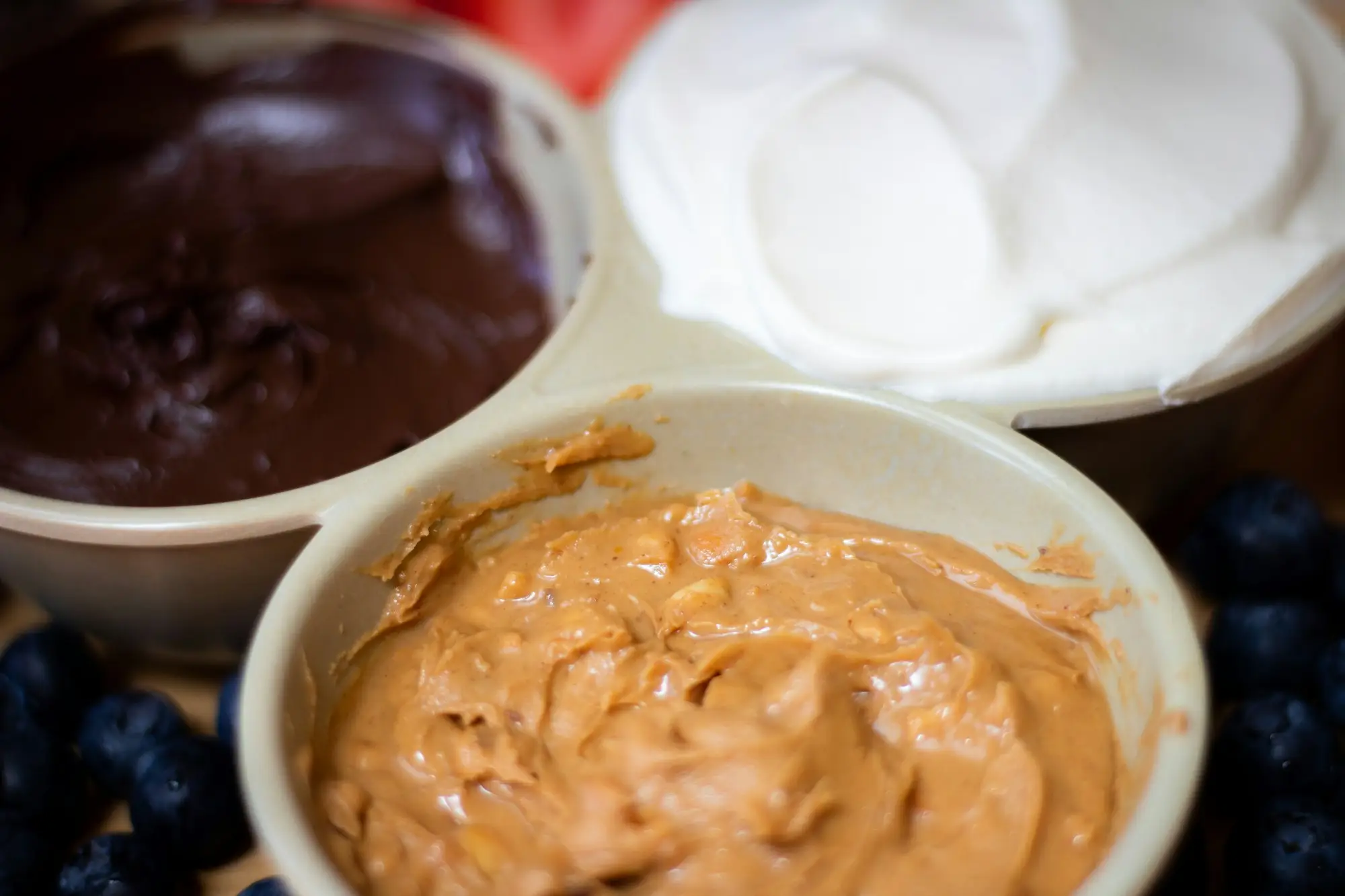
- Peanut. Thin a little smooth peanut butter with breast milk, formula, warm water or a purée your baby already eats, and feed it by spoon.14 Peanut powder mixed into a purée, or peanut puffs softened with water or milk, also work.2
- Egg. Well cooked — scrambled, or hard-boiled and mashed.4
- Dairy. Plain whole-milk or Greek yogurt is fine before 12 months; cow’s milk as a drink is not.48
- Wheat, fish, sesame. Soft infant cereals with wheat, flaked well-cooked fish with bones removed, and smooth tahini thinned like peanut butter.48
Never give whole peanuts, tree nuts, nut pieces or a spoonful of thick nut butter — they’re choking hazards. The AAP advises avoiding whole peanuts until at least age 4.410
Mild reaction or emergency?
Allergic reactions can show up on the skin, in the gut, in breathing or in circulation.5 Hives — raised pink welts with pale centers that look like bug bites — and facial swelling are the most common signs of a food allergy.7 Babies may also rub their eyes, keep sticking their tongue out, cry a lot, arch their back or go limp.5
Not every rash is an allergy. Redness around the mouth after acidic foods such as tomato can be simple skin irritation.5 Still, if your baby gets a rash, vomits or has diarrhea after a new food, stop that food and call your pediatrician.4
The AAP’s symptom guide sorts reactions by urgency. Hives all over the body, major swelling of the face, or vomiting within 2 hours of a high-risk food such as egg or nuts means going to the ER now.7
Call 911 right away if, after a food, your baby has
- Trouble breathing, wheezing, or a cough or hoarse cry that starts suddenly
- Trouble swallowing or sudden drooling
- Swelling of the lips or tongue
- Pale or bluish skin, or seems floppy or unusually sleepy
- Inconsolable crying with any of the signs above
These are signs of anaphylaxis, a life-threatening reaction.675 If your baby has been prescribed epinephrine, give it right away and then call 911.6 Don’t wait to see if it passes, and don’t use an antihistamine instead of epinephrine.5
Where advice differs
You may read slightly different starting ages. The AAP’s symptom guide says to start high-risk foods “after 6 months”;9 the AAP’s 2019 clinical report and the NIAID guidelines talk about 4 to 6 months.32 We follow the 2025–2030 Dietary Guidelines, which bring these together: around 6 months for most babies, and as early as 4 to 6 months, with a pediatrician’s plan, for high-risk babies.1
The AAP’s family allergy page also suggests checking with your pediatrician first if your baby has any eczema or a family history of allergies.5 That’s a reasonable, cautious step — just don’t let it turn into a long delay. For what comes next, see 10-month-old meal ideas and protein for babies.
When to talk to your pediatrician
Talk to your baby's doctor before or after starting allergens if
- Your baby has severe or persistent eczema, or has reacted to egg or another food
- You see a rash, hives, vomiting or diarrhea after a new food
- A reaction happens again when you re-offer the same food
- You're unsure whether your baby needs allergy testing first
- Your baby has a diagnosed food allergy and you want to know how to manage it at daycare or with family
These points come from the NIAID guidelines and the AAP.247
Common questions
When should I introduce peanut butter to my baby?
For most babies, around 6 months, once they've started a few other solid foods. Babies with severe eczema and/or an egg allergy are at high risk, and the guidelines recommend talking with your pediatrician about introducing peanut as early as 4 to 6 months.
How do I give peanut butter to a baby safely?
Thin a small amount of smooth peanut butter with breast milk, formula, warm water or a purée your baby already eats, and feed it by spoon. Never give whole peanuts, nut pieces or a spoonful of thick nut butter — they are choking hazards.
When can babies eat egg?
Egg can be introduced with other solid foods at about 6 months. Serve it well cooked, such as scrambled or hard-boiled and mashed. If your baby has severe eczema, talk with your pediatrician first.
What does a food allergy rash look like on a baby?
Allergic hives are raised pink welts with pale centers that look like bug bites, often with swelling of the face. Redness just around the mouth after acidic foods like tomato can be skin irritation rather than allergy. Call your pediatrician about any new rash after a food.
Should I wait a few days between new allergens?
Introduce one new allergen at a time. Advice on the gap varies from about a day to 3 to 5 days; a few days makes it easier to tell which food caused a reaction.
Do I need to keep giving peanut once my baby has had it?
Yes. The protection seen in studies came from early introduction with continued, regular servings. Keep peanut and egg in your baby's diet routinely once they're tolerated.
Sources
- U.S. Department of Agriculture and U.S. Department of Health and Human Services. Infancy & Early Childhood, p. 6. Dietary Guidelines for Americans, 2025–2030.
- Togias A, et al. J Allergy Clin Immunol. 2017;139(1):29–44. Addendum guidelines for the prevention of peanut allergy in the United States: Report of the National Institute of Allergy and Infectious Diseases–sponsored expert panel.
- Greer FR, Sicherer SH, Burks AW; AAP Committee on Nutrition, Section on Allergy and Immunology. Pediatrics. 2019;143(4):e20190281. The Effects of Early Nutritional Interventions on the Development of Atopic Disease in Infants and Children.
- American Academy of Pediatrics, HealthyChildren.org. When to Introduce Egg, Peanut Butter & Other Common Food Allergens to a Baby.
- American Academy of Pediatrics, HealthyChildren.org. Food Allergies in Children: Causes, Symptoms, Diagnosis & Treatment.
- American Academy of Pediatrics, HealthyChildren.org. Anaphylaxis in Infants & Children: Responding to Severe Allergic Reactions.
- American Academy of Pediatrics, HealthyChildren.org Symptom Checker. Food Allergy.
- Centers for Disease Control and Prevention. When, What, and How to Introduce Solid Foods.
- American Academy of Pediatrics, HealthyChildren.org Symptom Checker. Solid Foods (Baby Foods).
- Centers for Disease Control and Prevention. Choking Hazards.
This article is for general information and isn't a substitute for advice from your child's doctor. Our editorial standards.