On this page
The short version
- Poop gets firmer, smellier and more colorful once solids start. That alone isn't constipation.
- Constipation means hard stools, pain or crying when pooping, straining for more than 10 minutes, or 3 or more days without a stool.
- Offer high-fiber baby foods twice a day — peas, beans, apricots, prunes, peaches, pears and plums — plus 4–8 oz of water a day from about 6 months.
- Don't give juice, laxatives or suppositories before 12 months unless your pediatrician recommends them. Green vomit means the ER.
What’s normal once solids start
Some change in your baby’s poop after starting solids is expected: the AAP says stools become more solid, more variable in color and much stronger-smelling once solid foods begin.2 Peas can turn it deep green, beets can turn it red, and you may spot undigested bits of peas, corn or vegetable skins. All of that is normal.2
Firmer isn’t the same as constipated. The AAP’s symptom guide defines constipation in children as any of these:1
- Pain or crying when passing a stool, or being unable to pass one
- Straining or pushing for more than 10 minutes without a stool
- 3 or more days without a stool (breastfed babies over 1 month old are an exception — soft, pain-free stools every 4 to 7 days can be normal for them)
A normal range for children is anywhere from 3 stools a day to 1 every 2 days.1 What matters most is softness: hard, dry, pebble-like stools are the sign to act on.3
Straining isn’t always constipation
Grunting, going red in the face and drawing up the legs while pooping is normal in young babies. They’re still learning to relax the muscles that let stool out, and pushing while lying on their back gets no help from gravity.1 The key is whether they then pass a normal-sized, soft stool.1
Foods that help a constipated baby
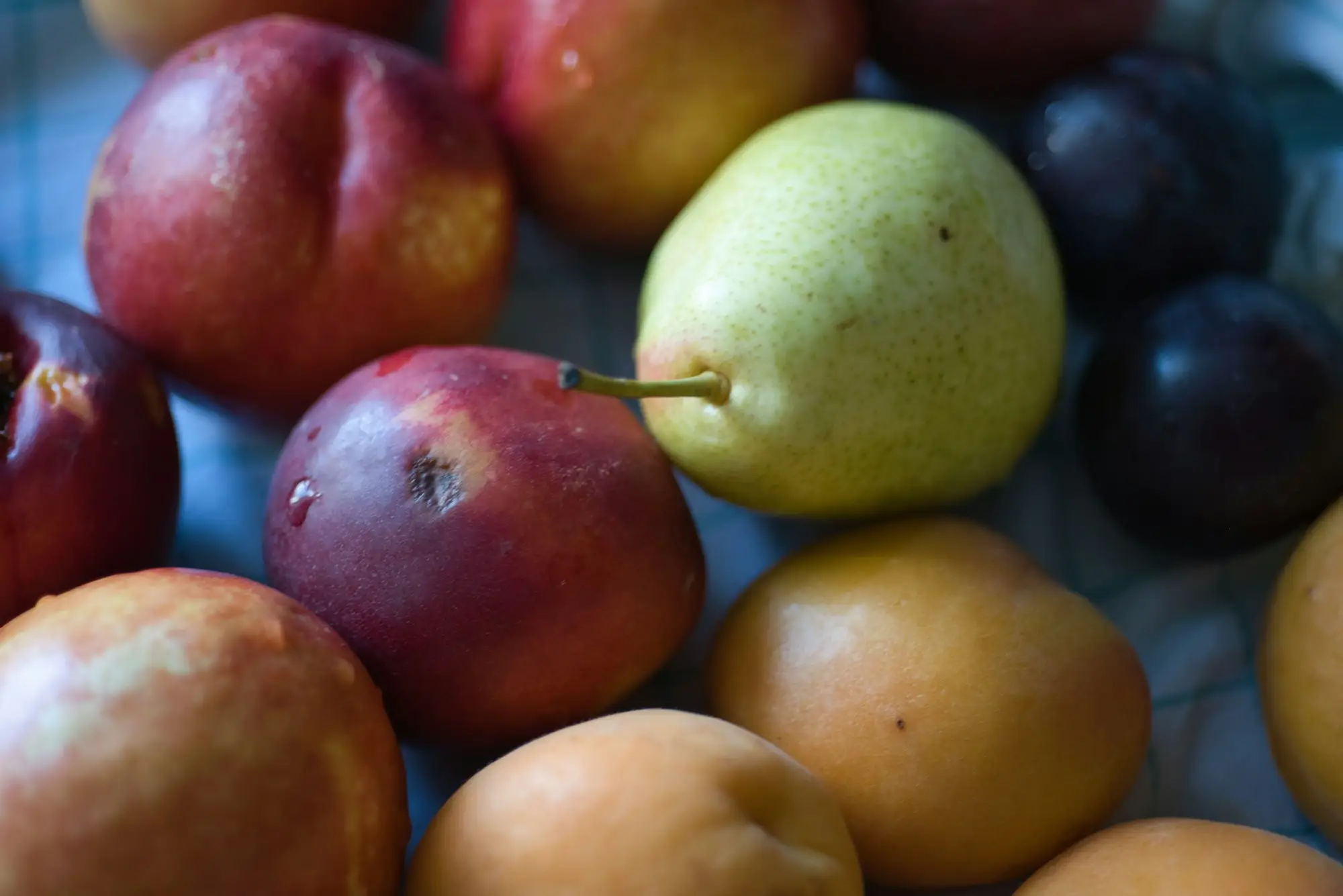
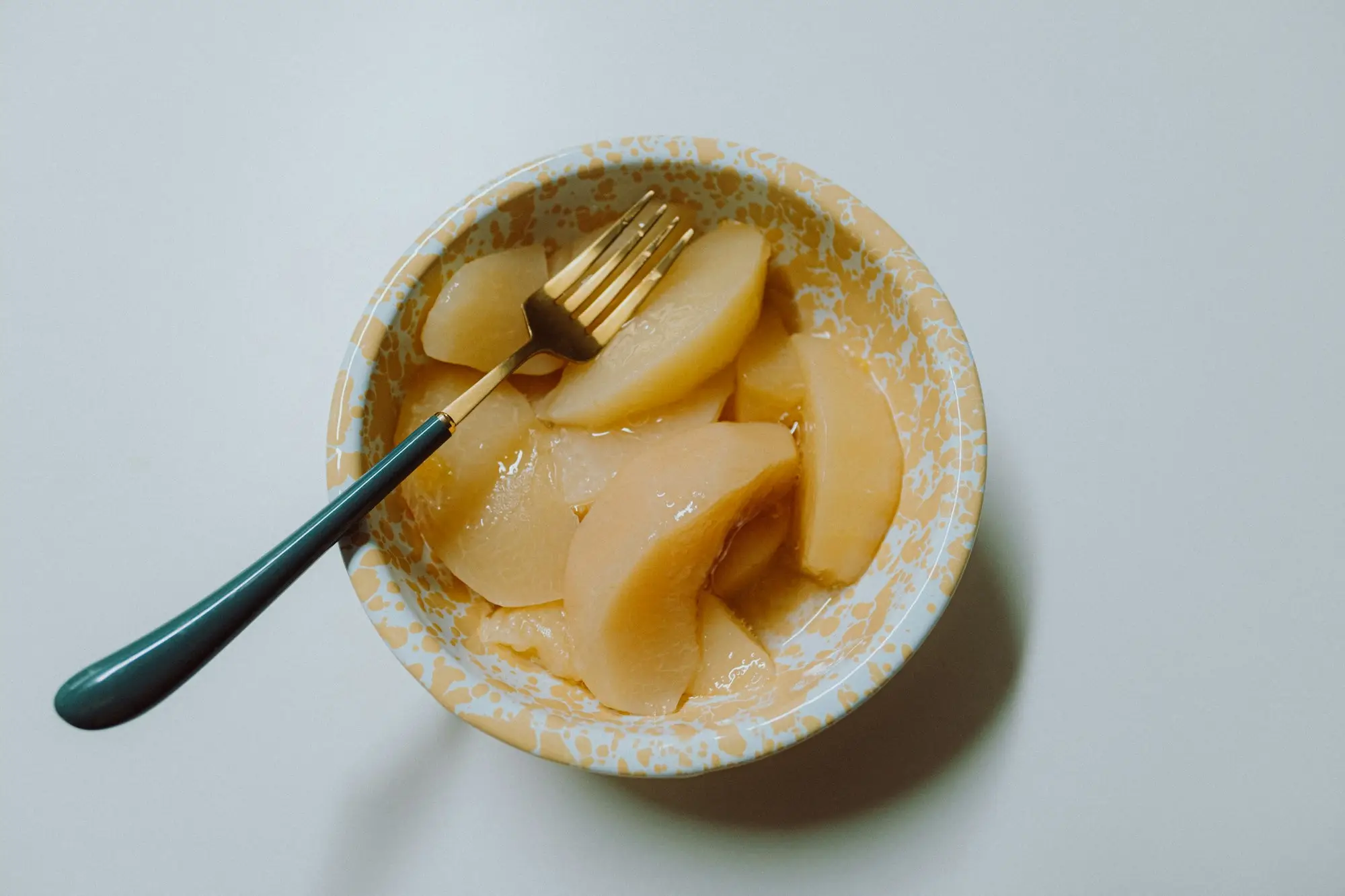
For babies on baby foods, the AAP suggests adding high-fiber foods twice a day — peas, beans, apricots, prunes, peaches, pears or plums.1 These are the “P” fruits many parents hear about, plus a few friends. For babies already on finger foods, add cereals and small pieces of soft fresh fruit.1
In practice, that might look like oatmeal with puréed pear for breakfast, mashed peas or beans at lunch, and puréed prune or peach stirred into yogurt later in the day. Mash beans well — whole beans are a choking hazard for babies.9
There’s no official fiber target for babies under 1 year, so you don’t need to count grams.4 Your pediatrician can tell you which foods to focus on.4
| Offer more often | Watch or avoid |
|---|---|
| Puréed or soft pears, prunes, peaches, plums, apricots | Cow's milk as a drink (not before 12 months) |
| Mashed peas and beans | Lots of cheese in an older baby's diet |
| Oat, barley or multigrain infant cereal | Only rice cereal, every day |
| Small pieces of soft fresh fruit (finger-food stage) | Juice, unless your pediatrician recommends it |
Fiber works over days, not hours. Aim for a steady habit, not a big dose on a bad day.
Foods to watch
Cow’s milk shouldn’t be given as a drink before 12 months — the CDC warns it can put babies at risk of intestinal bleeding and has too many proteins and minerals for their kidneys.10 Yogurt and cheese are fine for babies.9 But in children generally, milk and cheese are the foods that, eaten in large amounts, can cause hard, pale stools.1 If cheese has become a daily favorite, offer it alongside fruit and vegetables rather than instead of them.
Infant cereal. The CDC recommends rotating oat, barley and multigrain infant cereals instead of serving only rice cereal, which can increase arsenic exposure.9 Oatmeal is also on the NIH’s list of fiber sources for children.4
You may read that rice cereal or bananas “cause” constipation. We couldn’t find that claim in AAP, CDC or NIH guidance, so we don’t repeat it. Variety is the useful takeaway.
Water from about 6 months
From about 6 months, babies can have a little water: 4–8 oz (½–1 cup) a day, offered in an open, sippy or straw cup.7 The AAP’s starting-solids guide says to keep it to no more than 8 oz a day.2 Breast milk or formula still provides most of your baby’s fluids. For more on starting water, see when babies can have water and how much.
Water helps fiber do its job, but extra water on its own isn’t an effective treatment for constipation.3
What about prune or pear juice?
This is where advice gets confusing, so here’s exactly what the AAP says. Its 2017 policy states that juice should not be introduced to infants before 12 months “unless clinically indicated.”8 The same policy notes that a pediatric gastroenterology guideline suggests prune, pear and apple juice to help soften stools in constipated infants, and that when juice is medically indicated for a baby over 6 months, it should be given in a cup.8 The AAP’s symptom guide also lists pear and apple juice for constipated babies.1
We follow the policy: ask your pediatrician before giving any juice to a baby under 12 months, and let them tell you whether it’s needed and how much. Puréed prunes and pears give you the same fruits with their fiber intact. For children over 1, our guide to foods that help toddler constipation covers juice limits.
Other things that help
- Knees to tummy. Holding your baby’s knees up toward the chest mimics squatting, the natural position for pushing. A gentle press on the lower belly may help; stop if nothing happens in a few minutes.1
- Warmth. Sitting in warm water can help a baby relax and pass a stool.1
- No medicines on your own. Don’t give a laxative, suppository or enema unless your baby’s doctor recommends one.6 Ask your pediatrician before giving any product.
If your baby takes an iron supplement, mention the constipation to your doctor rather than stopping it — iron supplements are one of the medicines that can make constipation worse.5 Our guide to iron-rich foods for babies has food options.
When it’s urgent
Most constipation after starting solids settles with food changes. Some signs need care quickly.
Get medical care now if your baby has
- Green (bile) vomit — go to the ER
- Belly or rectal pain (including crying or straining) lasting more than an hour after home care
- Vomiting 2 or more times with a belly that looks more swollen than usual
- New weak sucking or weak, floppy muscles (under 12 months)
- Looks or acts very sick
These come from the AAP’s symptom guide.1 The NIH adds blood in the stool, bleeding from the bottom, constant belly pain and weight loss as reasons to see a doctor right away.5 And while you’re adjusting your baby’s diet, one rule doesn’t bend: no honey before 12 months, in food or on a pacifier, because it can cause botulism, a severe food poisoning.10
When to talk to your pediatrician
Call your baby's doctor if
- Your baby is under 2 months and seems constipated (beyond normal grunting and straining)
- There's blood in the stool or bleeding from the bottom
- Infrequent or hard stools don't improve after diet changes
- Painful stools happen 3 or more times after diet changes, or constipation keeps coming back
- It lasts more than 1 to 2 weeks despite home care
The AAP’s guide says to call if constipation lasts more than a week after diet changes; the NIH says more than 2 weeks.15 For a baby, we’d call at the shorter mark.
Common questions
Is it normal for a baby to get constipated after starting solids?
It's common for poop to become firmer, smellier and more colorful once solids start, and that's normal. It's constipation if stools are hard or painful, your baby strains for more than 10 minutes, or goes 3 or more days without a stool.
What foods help a constipated baby poop?
The AAP suggests high-fiber baby foods twice a day, such as peas, beans, apricots, prunes, peaches, pears and plums. For babies on finger foods, add cereals and small pieces of soft fruit.
Can I give my baby prune or pear juice for constipation?
Ask your pediatrician first. The AAP says juice should not be given to babies under 12 months unless clinically indicated, though doctors sometimes recommend small amounts of prune, pear or apple juice for infant constipation. Whole puréed fruit is the usual first step.
How much water can a constipated baby have?
From about 6 months, the AAP suggests 4–8 oz (½–1 cup) of water a day, offered in a cup. More water alone doesn't treat constipation, so pair it with high-fiber foods.
What foods should a constipated baby avoid?
Don't give cow's milk as a drink before 12 months, and in older babies watch for a diet heavy in cheese, since large amounts of milk and cheese can cause hard stools. If your baby eats infant cereal, rotate oat, barley and multigrain rather than serving only rice.
When is baby constipation an emergency?
Go to the ER for green (bile) vomit. Get care right away for belly or rectal pain lasting more than an hour despite home care, repeated vomiting with a swollen belly, or new weak sucking or floppy muscles in a baby under 12 months.
Sources
- American Academy of Pediatrics, HealthyChildren.org Symptom Checker. Constipation.
- American Academy of Pediatrics, HealthyChildren.org. When Can Babies Start Solid Foods? Readiness & Feeding Tips.
- American Academy of Pediatrics, HealthyChildren.org. Constipation in Children.
- National Institute of Diabetes and Digestive and Kidney Diseases (NIH). Eating, Diet, & Nutrition for Constipation in Children.
- National Institute of Diabetes and Digestive and Kidney Diseases (NIH). Symptoms & Causes of Constipation in Children.
- National Institute of Diabetes and Digestive and Kidney Diseases (NIH). Treatment for Constipation in Children.
- American Academy of Pediatrics, HealthyChildren.org. Recommended Drinks for Children Age 5 & Younger.
- Heyman MB, Abrams SA. Pediatrics. 2017;139(6):e20170967. Fruit Juice in Infants, Children, and Adolescents: Current Recommendations.
- Centers for Disease Control and Prevention. When, What, and How to Introduce Solid Foods.
- Centers for Disease Control and Prevention. Foods and Drinks to Avoid or Limit.
This article is for general information and isn't a substitute for advice from your child's doctor. Our editorial standards.