On this page
- What should a picky 5-year-old eat for dinner?
- 12 recipes with protein per plate
- How do I add a new food without a fight?
- How do I fit these into a normal week?
- What if my child only eats pasta and cheese?
- How do I keep the cuts safe at 5?
- What drinks go with picky-eater meals?
- When should I worry?
- Common questions
The short version
- A picky 5-year-old can still eat a balanced dinner. The AAP's sample is about 2 oz of protein, ½ cup of pasta, rice or potato and ¼ cup of vegetables.
- The 12 recipes below start from foods many picky kids already accept, and show the protein in each.
- Serve one new food next to one familiar food, and keep offering it. It can take 13 or more tries.
- Don't force or bribe. Cut round or firm foods small, and call the doctor if growth or weight is a worry.
What should a picky 5-year-old eat for dinner?
A balanced dinner for a young child is about 2 oz of meat, fish or chicken, ½ cup of pasta, rice or potato and ¼ cup of vegetables, with ½ cup of milk, according to the American Academy of Pediatrics’ sample preschool menu.5 That menu is planned for a 4-year-old of about 36 lb, so a bigger 5-year-old may eat a little more.5
Picky doesn’t mean the plate has to change. Some 4-year-olds are still picky eaters, and the AAP’s advice is to encourage new foods without pressure.1 So the recipes below keep the familiar parts (pasta, rice, cheese, tortillas) and put a protein on the same plate.
12 recipes with protein per plate
Protein amounts are calculated from USDA FoodData Central for the portion shown, and are for the protein food only.7 For scale, the Dietary Reference Intake for ages 4 to 8 is 0.95 g per kg of body weight a day,6 which is roughly 19 g for a 44 lb (20 kg) child. One good dinner covers a large share of that.
| Meal | Protein portion | Protein |
|---|---|---|
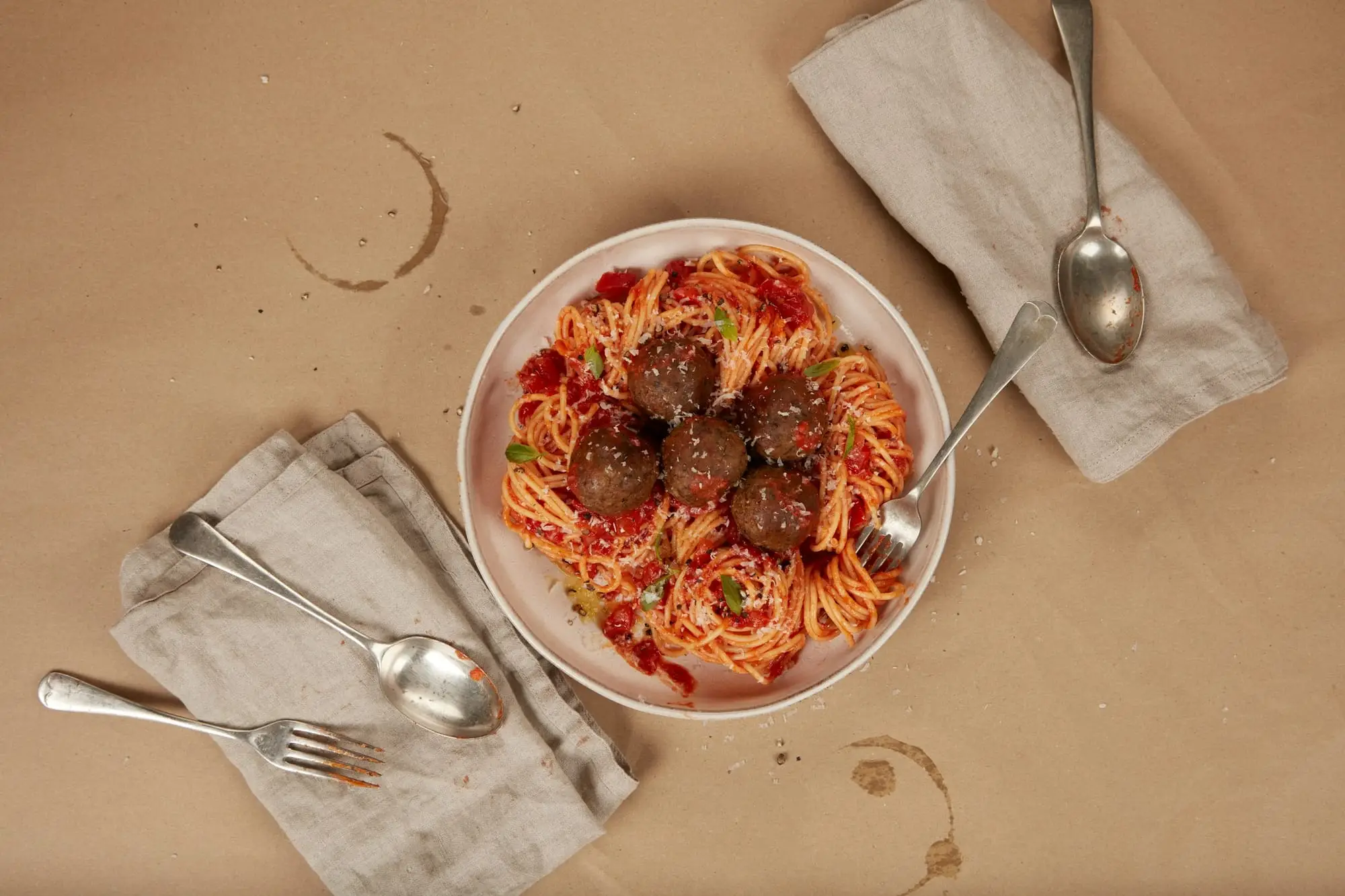
| Turkey meatballs with spaghetti | 1½ oz cooked ground turkey | ≈ 12 g |
| Baked chicken fingers with rice | 2 oz cooked chicken breast | ≈ 18 g |
| Bean and cheese quesadilla | ½ cup black beans + 1 oz cheddar | ≈ 14 g |
| Egg and chicken fried rice | 1 egg + 1 oz cooked chicken | ≈ 15 g |
| Tofu and vegetable stir-fry over rice | 2 oz firm tofu | ≈ 10 g |
| Mac and cheese with peas | 1 oz cheddar + ½ cup milk in the sauce | ≈ 11 g |
| Build-your-own turkey tacos | 2 oz cooked ground turkey | ≈ 15 g |
| Mini turkey burgers | 2 oz cooked ground turkey | ≈ 15 g |
| Black bean burrito bowl | ½ cup black beans | ≈ 8 g |
| Chicken pasta with tomato sauce | 1 oz cooked chicken breast | ≈ 9 g |
| Grilled cheese strips with tomato soup | 1 oz cheddar | ≈ 7 g |
| Scrambled eggs, toast and fruit | 2 eggs | ≈ 13 g |
A few notes on making them work:
- Meatballs and burgers: Bake them plain and let your child add sauce or ketchup. Cut meatballs into pieces no larger than half an inch.4
- Tacos and burrito bowls: Put each ingredient in its own pile and let your child build their own. Mash the beans lightly if whole ones get refused.
- Mac and cheese, quesadilla, grilled cheese: These are the “bridge” meals. Add a spoonful of peas to the side, or a few cooked vegetables beside the plate rather than mixed in.
- Fried rice and stir-fry: Keep the pieces small and soft. Serve the vegetables separately at first if mixed-in foods get a “no.”
How do I add a new food without a fight?
Pair it with something safe. The AAP suggests offering one familiar food plus one new food at meals.3 Offer new foods alongside foods you know your child likes.2
Then be patient. The AAP says it can take 13 or more exposures to a new food before a child will accept it, and touching, smelling or licking a food counts as a try.3 A single refusal tells you very little. Don’t remove a refused food from the menu; keep serving it next to foods your child already enjoys.2
Don’t try to force a child to eat. Offer, stay calm and try again another day.
Low-pressure habits that help
- Let them help. Have your child pick a new fruit or vegetable at the store, or use a kid’s chef knife on a tomato or a fork to mash an avocado.3
- Give a job at the table. Setting the table or helping in another way makes it more likely they’ll try the food.12
- Skip the pressure. Parents can encourage children to try new foods but shouldn’t pressure them to eat.1
- Stay calm when dinner is refused. The AAP advises staying calm when your child won’t eat the meal you prepared.2
How do I fit these into a normal week?
Pick three or four dinners your child already half-likes and rotate them, rather than trying all 12 in a fortnight. A familiar plate on a tired night is a good plate. Then change one thing at a time: a new vegetable beside the spaghetti, a different filling in the quesadilla, a new dip for the chicken fingers.
Cook once and use it twice. Extra meatballs or burger patties freeze well and make a quick lunch the next day, and leftover fried rice or pasta is easy to reheat. If you’re juggling several ages, the same pattern of protein, starch and vegetable works for the whole family, so you don’t have to cook a separate dinner.
It also helps to judge the day, not the plate. Appetite swings from meal to meal, so a dinner that’s mostly rice isn’t a failure if the rest of the day had milk, eggs, beans or fruit in it.
What if my child only eats pasta and cheese?
That’s a common version of picky eating, and the answer is the same: keep the familiar food on the plate and keep the other foods coming. The AAP says not to remove refused foods from the menu, and to serve them alongside foods your child already likes.2 Over weeks, a new food that sits on the plate without any pressure becomes less strange, and touching or smelling it already counts as progress.3
How do I keep the cuts safe at 5?
The AAP says to keep dangerous foods from children until age 4 or older, depending on their development.4 Round, firm foods like hot dogs and whole grapes should only be served if completely chopped into tiny pieces.4 Cut food into pieces no larger than half an inch, and have children sit down to eat.4
The CDC also lists uncut grapes, berries, cherries and melon balls, chunks of nut and seed butters, popcorn and chips as hazards.8 None of the recipes above needs them. If your child has trouble chewing or swallowing, ask your pediatrician what’s safe.
What drinks go with picky-eater meals?
Milk or water. Sugary drinks, including juice drinks, lemonade and sports drinks, can lead to cavities and unhealthy weight gain.1 A glass of milk with dinner also fits the AAP’s sample plate.5
When should I worry?
Picky eating on its own is common. For more on what’s typical and what helps, see what to do when a 4-year-old won’t eat and meal ideas for picky toddlers. For a full week of lunches and dinners, see 5-year-old meal ideas.
Call your child's doctor if
- Your child is losing weight or isn't growing as expected
- They eat only a handful of foods and refuse whole food groups for weeks
- They gag, cough or choke often when eating
- Mealtimes cause severe distress, or you notice signs of a food allergy such as hives or swelling
- You're worried about their diet, or you're thinking about a vitamin or supplement
Don’t start vitamins or supplements without asking your pediatrician first.
Common questions
What should I make for a picky 5-year-old?
Start with foods they already accept, such as pasta, rice, chicken or cheese, and build a balanced plate around them. The AAP's sample dinner for a preschooler is 2 oz of meat, fish or chicken, ½ cup of pasta, rice or potato and ¼ cup of vegetable, with milk.
How many times should I offer a food my child refuses?
Many times. The AAP says it can take 13 or more exposures to a new food before a child accepts it, and touching, smelling or licking counts as a try.
Should I force my picky eater to take a bite?
No. The AAP advises you not to force your child to eat, and to encourage them to try new foods without pressure.
Is it OK to serve the same few foods every day?
For a while, yes, as long as you keep offering other foods too. The AAP says not to remove refused foods from the menu, but to keep serving them alongside foods your child likes.
How much protein does a 5-year-old need?
The Dietary Reference Intake for ages 4 to 8 is 0.95 g of protein per kg of body weight a day, which is roughly 19 g for a child of 44 lb (20 kg). Most children get this from ordinary meals with milk, eggs, beans, meat or tofu.
Can a 5-year-old eat whole grapes or hot dogs?
Not as they come. The AAP says round, firm foods like hot dogs and whole grapes should only be served if completely chopped into tiny pieces, and to cut food into pieces no larger than half an inch.
Sources
- American Academy of Pediatrics, HealthyChildren.org. Feeding & Nutrition Tips: 4-to 5-Year-Olds.
- American Academy of Pediatrics, HealthyChildren.org. How do I deal with my picky eater?.
- American Academy of Pediatrics, HealthyChildren.org. Taste, Touch, Explore: Make Nutritious Food Fun for Young Eaters.
- American Academy of Pediatrics, HealthyChildren.org. Choking Prevention for Babies & Children: What Every Parent Needs to Know.
- American Academy of Pediatrics, HealthyChildren.org. Sample Menu for a Preschooler.
- PubMed Central (peer-reviewed review of protein requirements; Dietary Reference Intakes). Protein requirements by age, Table 1 (RDA, nitrogen balance method).
- U.S. Department of Agriculture, Agricultural Research Service. SR Legacy data; per-portion amounts calculated by Growing Plate. FoodData Central.
- Centers for Disease Control and Prevention. Choking Hazards.
This article is for general information and isn't a substitute for advice from your child's doctor. Our editorial standards.